

Contact
Write to Us And We Would Be Happy to Advise You.
Do you have any questions, or would you like to speak directly with a representative?
By Fariha
Niceone-Keypad manufactures custom medical device membrane switches for OEM engineers, medical device QA buyers, and procurement teams that need sealed, cleanable, high-touch HMI panels. Our Dongguan factory and CT office support custom membrane keypads, graphic overlays, tactile domes, FPC or PCB circuits, backlighting, shielding, and IP-rated construction based on your device requirements.
For medical equipment, the membrane switch is not just a front label. It affects cleaning, glove operation, fluid resistance, user feedback, alarm visibility, documentation, and long-term field reliability. A good RFQ should define the overlay material, disinfectant exposure, dome feel, sealing target, connector, display window, shielding, and any ISO 13485-related documentation expectations.
This page is for buyers specifying interfaces for infusion pumps, diagnostic device front panels, patient monitors, handheld medical tools, hospital controls, and similar equipment. Send your drawings, cleaning requirements, and target specifications, and Niceone can review the build direction before quotation.
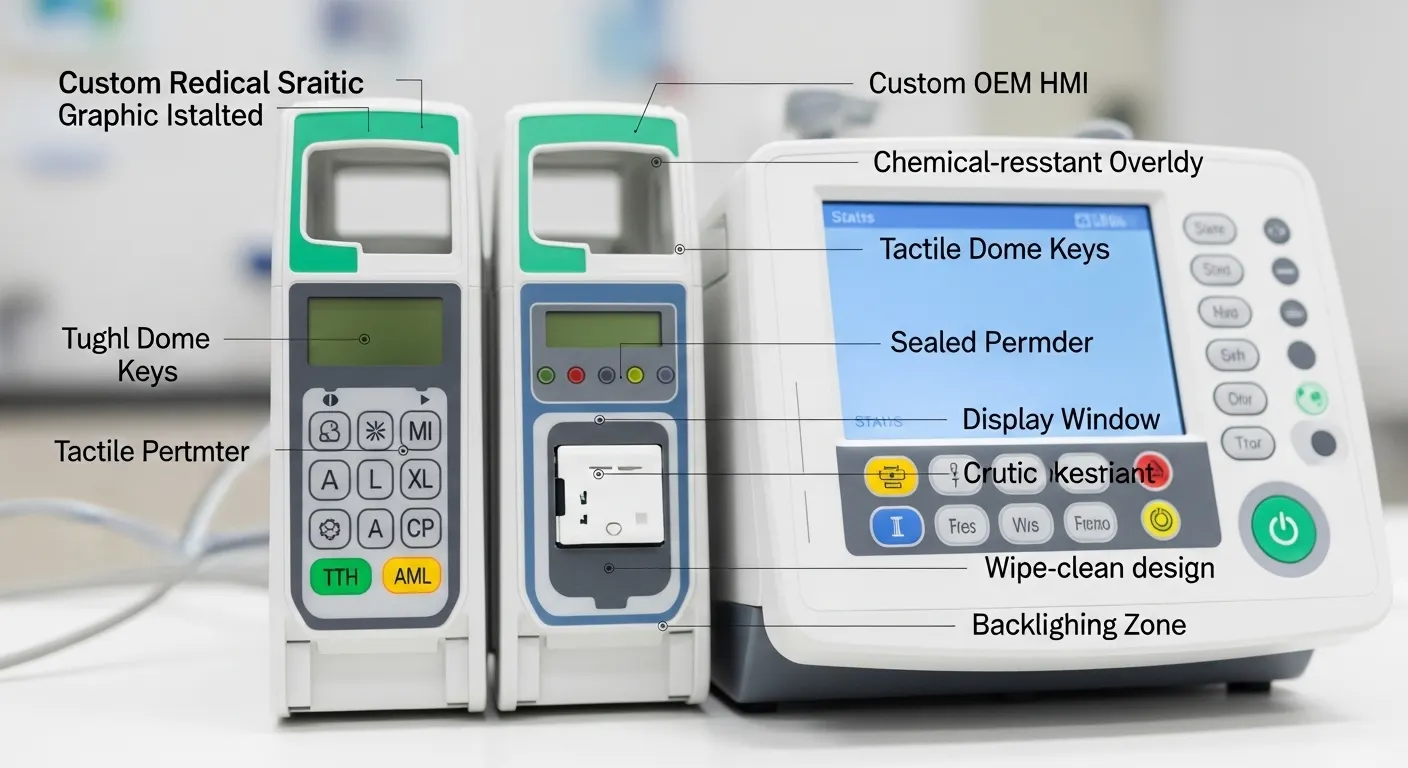
Medical device membrane switches are used where the control surface must stay low-profile, readable, sealed, and easy to wipe. They combine a printed graphic overlay, spacer layers, circuit layers, adhesive, optional tactile domes, and a connector tail into one custom HMI assembly.
For medical devices, the most important design questions are usually practical:
Niceone-Keypad supports custom membrane panels, membrane keypads, graphic overlays, FPC membrane switches, PCB-based membrane switches, silicone rubber keypad combinations, capacitive switches, dome labels, and waterproof membrane switch construction. For a broader view of manufacturing capabilities, see Niceone’s membrane switch panel manufacturer page.
Medical membrane switches are common on equipment where the user interface must be compact, sealed, and clearly labeled. The design changes depending on whether the device is stationary, handheld, portable, or mounted in a clinical environment.
| Medical device or panel type | Main UI risk | Recommended membrane switch features | RFQ detail to confirm |
|---|---|---|---|
| Infusion pump keypad | Frequent parameter input and cleaning | Tactile domes, sealed overlay, clear legends, status LEDs | Dome force, cleaning chemicals, IP target |
| Diagnostic device front panel | Display clarity and wipe-down exposure | Hard-coated overlay, display window, backlighting | Window material, surface finish, disinfectant exposure |
| Patient monitor interface | Alarm visibility and electronics protection | LED indicators, EMI/ESD shielding, durable overlay | Shielding layer, LED color, connector pinout |
| Hospital bed or control panel | Fluid exposure and repeated touch | Large keys, sealed perimeter, chemical-resistant overlay | Tail exit, adhesive, sealing method |
| Handheld medical tool | Portability and impact risk | PET overlay, compact FPC tail, tactile or capacitive input | Bend radius, connector type, enclosure fit |
These examples are not fixed templates. They show why Niceone asks for the device use case before quoting. An infusion pump keypad and a diagnostic front panel may both need cleanability, but their dome feel, window clarity, lighting, and sealing priorities can be different.
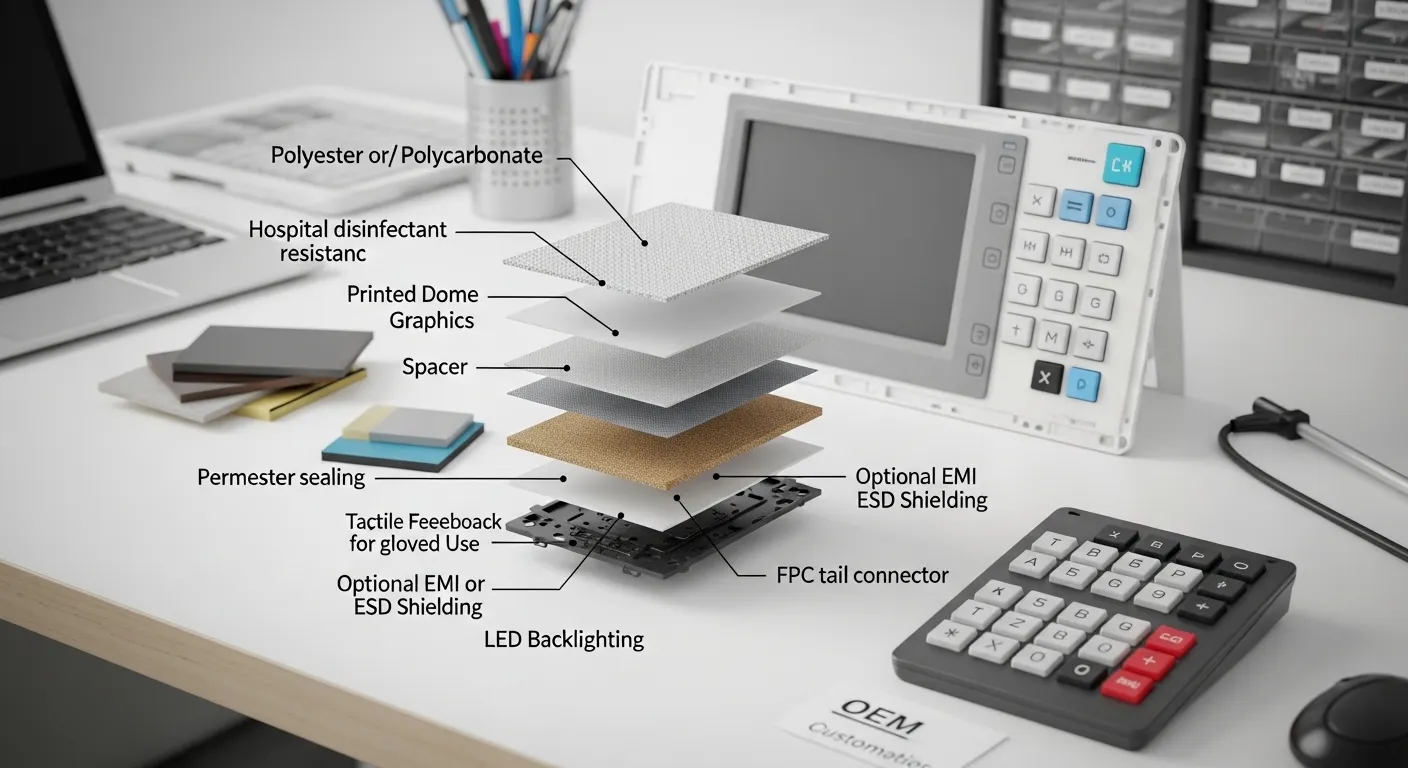
The overlay is the first surface clinicians, technicians, and patients touch. It should protect the printed graphics, support repeated wipe-down, and match the device’s visual design.
Common overlay options include:
Do not specify “medical-grade overlay” as a vague request. Instead, send the expected cleaning agents, wipe frequency, and surface finish requirement. This allows the material stack to be reviewed against the real use environment.
Cleanability depends on the material, ink system, adhesive, edge seal, window design, and chemical exposure. A panel that survives light wipe-down may not be suitable for aggressive disinfectants, long dwell times, or sterilization cycles.
Before production, medical OEMs should confirm:
Wipe-down disinfection and autoclave sterilization are not the same design problem. Autoclave exposure involves heat, pressure, and steam, so it should never be assumed without project-specific material validation.
For a complete RFQ preparation path, use Niceone’s membrane switch quote request checklist.
Medical users often operate panels while wearing gloves, under time pressure, or near alarms. The keypad should provide clear feedback without requiring excessive force.
Niceone can build tactile and non-tactile membrane switches depending on the device. For high-touch medical UIs, engineers should define the tactile feel early instead of leaving it as a late sample-stage correction.
Key tactile details include:
Do not rely on a generic “long life” statement. Send your expected cycle-life requirement, use environment, and button priority list. Niceone can then recommend a dome and layer construction for prototype review.
Medical panels often need more than a printed overlay and basic circuit. The assembly may need sealing, lighting, shielding, or display integration depending on the device.
For fluid and cleaning resistance, buyers should discuss:
For electronics protection, ESD, EMI, or RFI shielding may be needed near diagnostic boards, sensors, or communication modules. This should be defined early because shielding affects the layer stack and grounding design.
For visibility, Niceone can support LED backlighting, light guide film, fiber optic options, indicator windows, and display windows. Backlighting is useful for alarm keys, power buttons, status icons, and low-light clinical environments.
Many medical OEMs work under ISO 13485 quality systems. That does not mean every component supplier can be described as ISO 13485-certified. The safer specification approach is to define the documentation, material records, inspection expectations, and validation support required for your project.
Niceone should not be represented as ISO 13485-certified unless a verified certificate is supplied. Instead, buyers can ask for project documentation needs such as:
IEC 60601, ISO 10993, and other medical standards may apply to the finished device or patient-contact system. The membrane switch specification should support the OEM’s compliance plan, but it should not be described as making the full device compliant by itself.
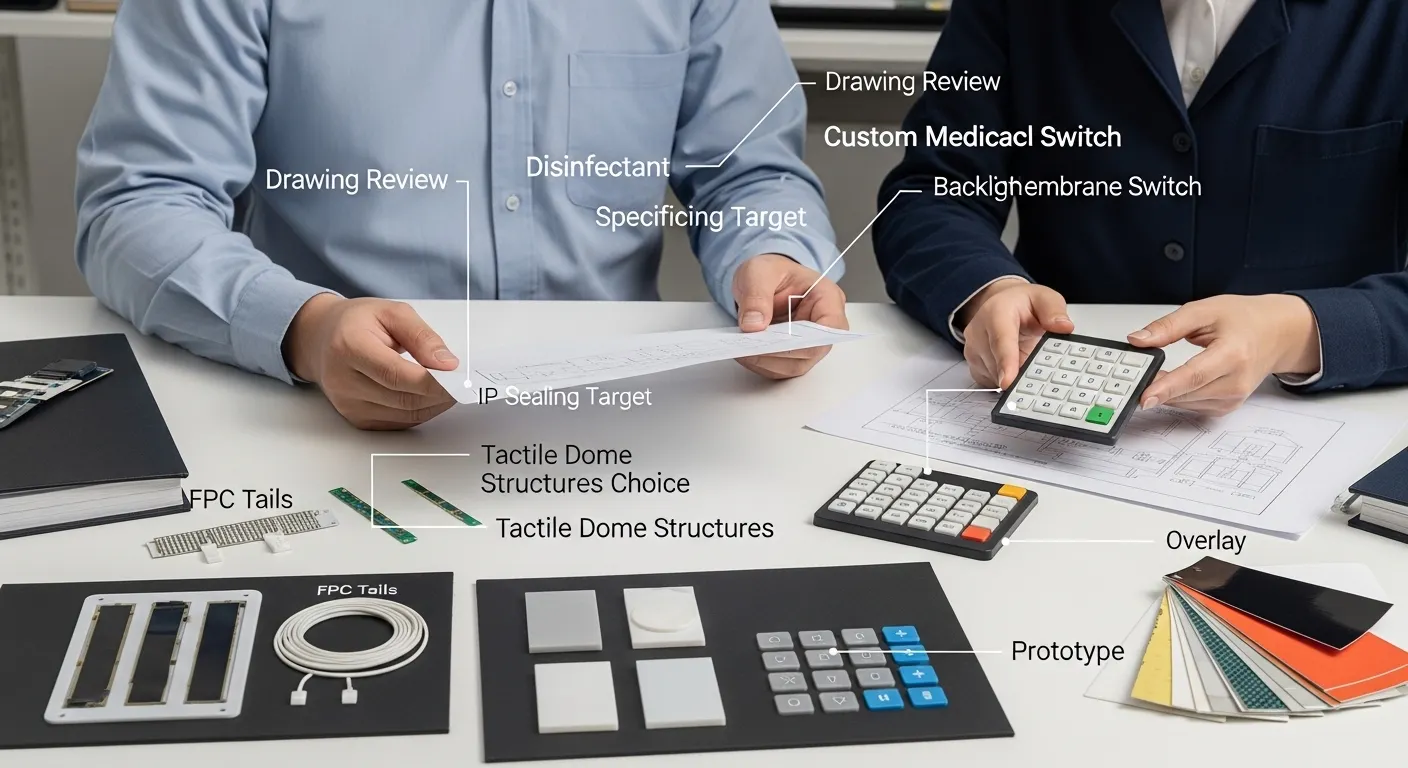
A strong RFQ helps Niceone quote the correct construction faster and reduces redesign risk. For medical device membrane switches, send more than artwork if possible.
Include:
If you are sourcing from the US and want a local contact point, Niceone also has a CT office for communication support: membrane switch suppliers USA CT office.
Niceone-Keypad combines custom HMI design support with membrane switch production in Dongguan, China, and customer service through its office at 18 Dayton Rd, Redding, CT 06896 USA. This structure helps medical OEMs and procurement teams discuss drawings, samples, technical changes, and quote requirements across time zones.
Our team can support custom membrane switches, membrane panels, graphic overlays, silicone rubber keypads, capacitive switches, dome labels, backlit panels, waterproof membrane switches, FPC circuits, PCB-based membrane switches, and related interface parts.
For medical projects, the best starting point is a technical review. Share the device use case, cleaning conditions, sealing target, tactile feel, circuit preference, and documentation expectations. Niceone can then recommend a build path for prototype or production quotation.
Yes, when the overlay, adhesive, sealing, and printing system are selected for the cleaning environment. Send the disinfectant type, concentration, dwell time, and wipe frequency so the material stack can be reviewed correctly.
Antimicrobial overlay films can be specified when the project requires them and suitable material options are available. The buyer should confirm the required material data, validation method, and regulatory documentation expectations before production.
ISO 13485 relates to quality management systems for medical device organizations and suppliers. Do not assume certification unless verified. Instead, define the documentation and supplier-control requirements your medical device project needs.
Many medical panels target sealed construction, and some projects may require IP65 or IP67-style protection. The correct target depends on fluid exposure, enclosure design, gasket area, adhesive, and tail exit.
Send drawings, artwork, dimensions, cleaning chemicals, IP target, dome force, connector details, backlighting needs, shielding requirements, quantity, and documentation expectations. This helps Niceone quote the correct construction.
Do not assume autoclave compatibility. Wipe-down cleaning and autoclave sterilization are different. Autoclave use requires project-specific review of overlay, adhesive, circuit, components, heat, steam, and pressure exposure.
Send Niceone-Keypad your medical device front-panel drawing, overlay artwork, target quantity, cleaning chemicals, IP rating target, dome force or gloved-use requirement, connector pinout, backlighting needs, shielding requirement, and documentation expectations. Our Dongguan factory and CT office can review your medical membrane switch requirements and help prepare a custom quote for prototype or production.
Do you have any questions, or would you like to speak directly with a representative?

