

Contact
Write to Us And We Would Be Happy to Advise You.
Do you have any questions, or would you like to speak directly with a representative?
By Fariha
Niceone-Keypad manufactures custom food processing membrane panels for OEM engineers and sanitation-compliance buyers who need sealed HMI controls for washdown equipment. For high-moisture food plants, the key decisions are not only artwork and button layout. Buyers must also define the target IP rating, cleaner exposure, overlay material, edge sealing, gasket design, tactile feel, and documentation needs before requesting a quote.
A membrane panel for packaging lines, ovens, fryers, cold storage, dairy equipment, or meat-processing machinery may face hot water, foaming cleaners, grease, condensation, gloves, and frequent wipe-downs. Niceone supports custom membrane switches, graphic overlays, membrane keypads, FPC circuits, PCB-based membrane switches, tactile domes, capacitive switches, LED backlighting, and waterproof constructions from its Dongguan factory, with US office support in Redding, Connecticut.
This page helps you prepare a washdown-ready specification before sending drawings for RFQ review.
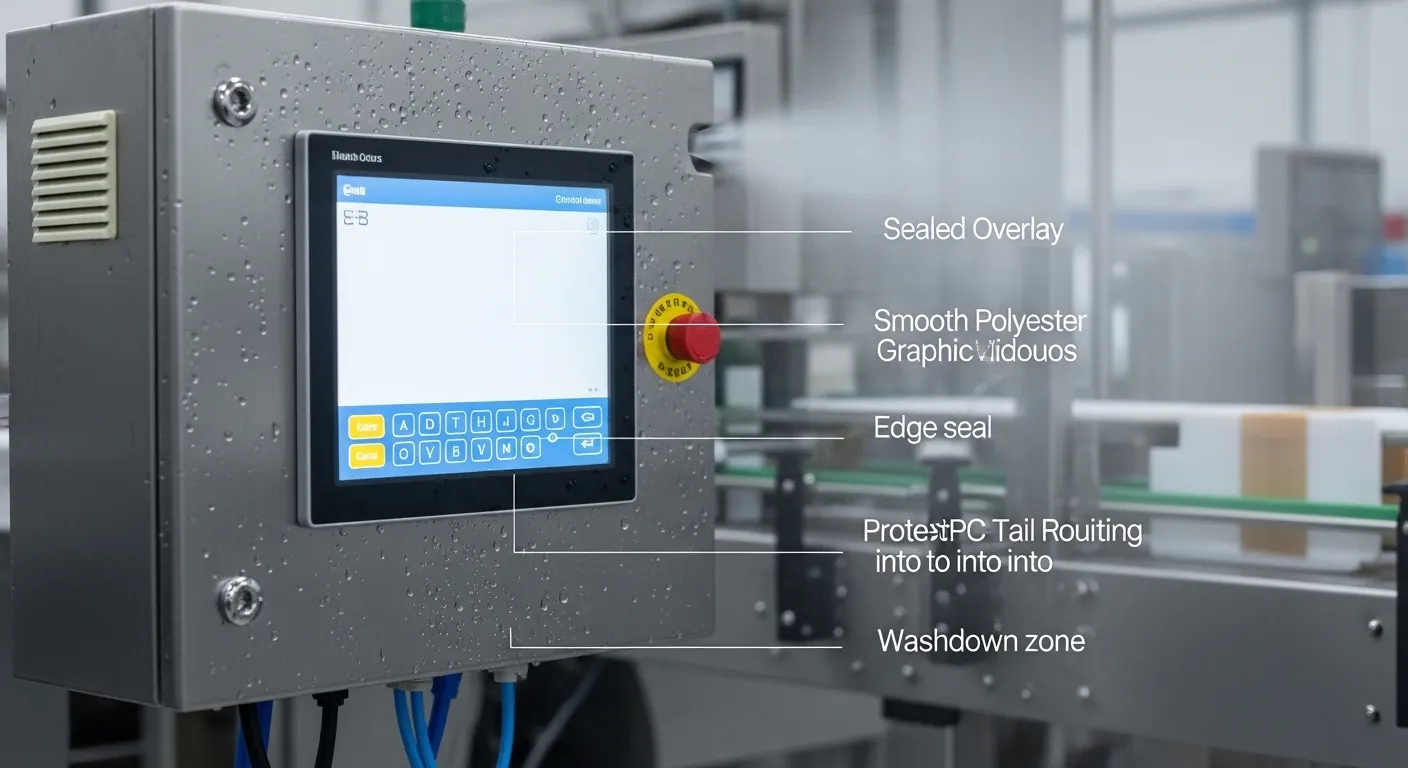
A food processing panel membrane should be specified around the real sanitation zone where the HMI will be installed. A control panel mounted on a dry cabinet does not face the same risk as a keypad beside a filling machine, fryer, washdown conveyor, or cold-room door.
Common fitment areas include:
The first design question is whether the panel is in a direct food-contact area, a splash zone, a washdown zone, or a protected equipment-control zone. This affects the overlay material, adhesive, sealing method, gasket design, and documentation the buyer may need.
Niceone can build the membrane panel around the equipment’s actual exposure profile. That includes moisture, cleaner type, cleaning frequency, temperature swings, operator gloves, oil, grease, and cable-routing constraints.
IP69K is often requested for food-processing equipment because it is associated with high-pressure, high-temperature washdown. However, not every panel needs the same sealing target. Over-specifying can add design complexity, while under-specifying can lead to water ingress, edge lifting, or switch failure.
A practical starting point:
The IP target should be discussed together with the housing design. A sealed overlay cannot compensate for a poor enclosure cutout, weak gasket compression, exposed tail exit, or unprotected connector.
For food equipment, the sealing conversation should include:
If your buyer specification calls for IP69K, send that requirement with the RFQ. Niceone can review the construction path and identify what must be confirmed before sampling.
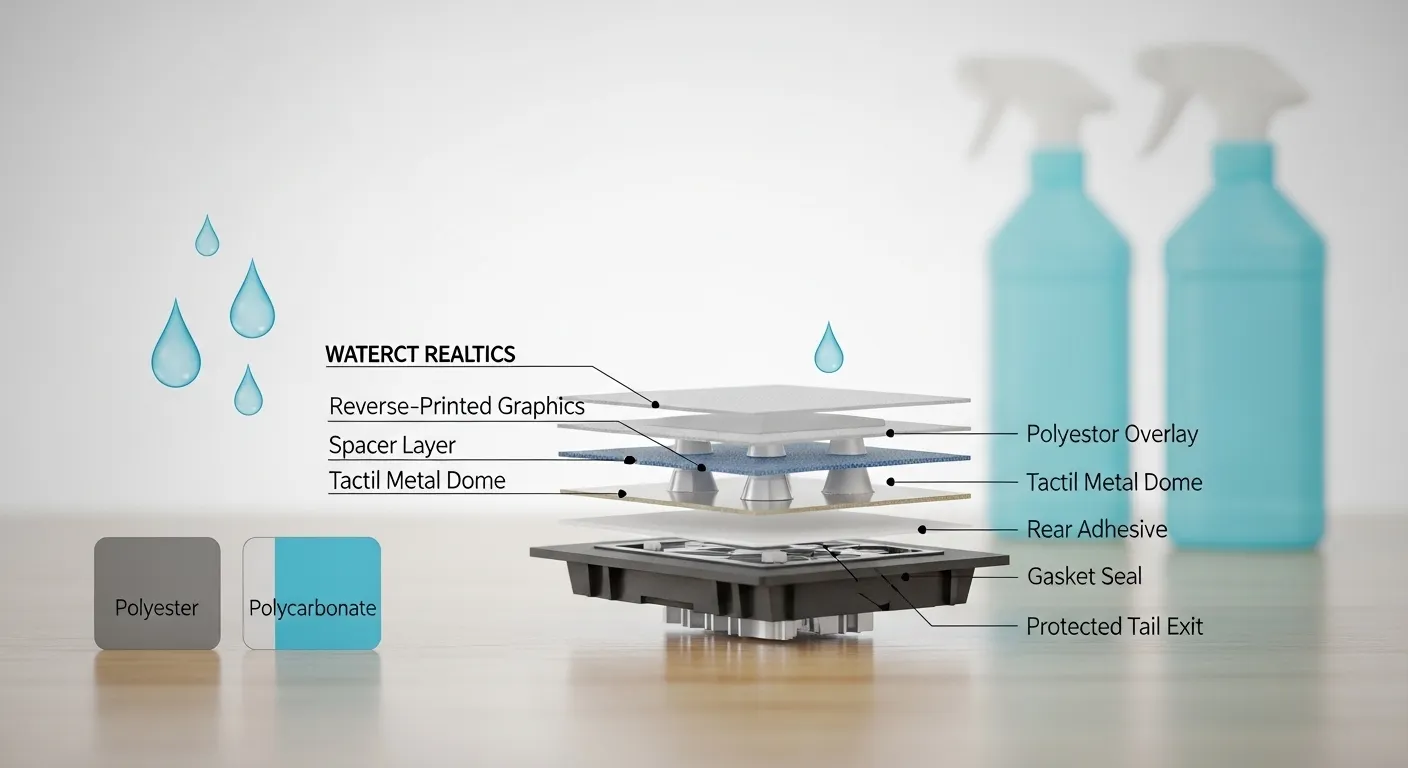
The overlay is the operator-facing surface. In a food plant, it must stay readable, cleanable, and stable after repeated sanitation cycles. The wrong combination of film, printing, adhesive, and edge design can create failure points.
Common overlay choices include polyester PET and polycarbonate PC. Polyester is often selected for durable membrane keypads and chemical-resistance needs. Polycarbonate can support attractive graphics and formed shapes, but chemical exposure must be reviewed carefully. The best choice depends on cleaner chemistry, temperature, abrasion, and the required finish.
For food-processing HMI panels, buyers should discuss:
A smooth front surface helps reduce crevices. That matters when the panel is cleaned around powder, oil, protein residue, sugar, flour, dairy residue, or meat-processing environments.
Antimicrobial overlays may be considered when the buyer requires that material feature. They should not be described as a replacement for sanitation. If antimicrobial performance is part of the procurement requirement, request test documentation and define how the material will be used in the equipment.
Cleaner compatibility should be discussed before material selection. “Chemical resistant” is too broad for food-processing equipment. The same cleaner can behave differently depending on concentration, dwell time, temperature, pressure, rinse process, and cleaning frequency.
Use this table as an RFQ preparation guide, not as a universal compatibility guarantee.
| Cleaner or Exposure Type | Common Food-Plant Use | Risk to Membrane Panel | Design Detail to Confirm | RFQ Data to Send |
|---|---|---|---|---|
| Chlorine / hypochlorite | General sanitation, surface disinfection | Fading, film stress, adhesive attack | Overlay film, print protection, edge seal | Concentration, dwell time, rinse method |
| Quaternary ammonium | Routine sanitizer use | Surface residue, long-term film exposure | Hardcoat, cleaner residue tolerance | Brand/chemical name and frequency |
| Peracetic acid | Dairy, meat, produce, CIP-adjacent areas | Strong oxidizing exposure | Film, ink, adhesive, gasket compatibility | Concentration, temperature, contact time |
| Caustic wash | Heavy soil and grease removal | Adhesive weakening, surface attack | Adhesive type, edge seal, rear gasket | pH, temperature, cleaning cycle |
| Acidic descaler | Mineral removal, equipment cleaning | Film and print stress | Overlay material and protected graphics | Acid type and concentration |
| Alcohol / IPA | Fast wipe-down, spot cleaning | Surface dulling or cracking on some plastics | Overlay film and hardcoat | Wipe frequency and solvent percentage |
| Foaming detergent | Conveyor and machinery cleaning | Residue at edges and seams | Edge seal, gasket, smooth front design | Foam dwell time and rinse pressure |
| Hot water washdown | Daily sanitation | Water ingress, adhesive lift | IP target, gasket, tail exit | Water temperature and spray pressure |
| Cold-room condensation | Freezer or cold-storage controls | Moisture cycling, fogging, adhesive stress | Material stability and enclosure seal | Temperature range and humidity cycle |
This table gives the engineering team a cleaner picture of the operating environment. It also helps procurement avoid vague “food-grade membrane panel” requests that do not define exposure.
Food-processing operators often work with wet gloves, oily surfaces, powders, or cold-room condensation. The input method should match how the machine is actually used.
Tactile metal domes are useful when the operator needs a clear click response. Embossing can help users locate buttons by feel. Non-tactile switches may suit flat wipe-clean interfaces. Capacitive switches can create a smooth modern surface, but glove type, water film, and false-touch risk must be reviewed.
Design choices to confirm include:
For ovens, fryers, and cold storage, the panel should also be reviewed for heat, oil, condensation, and cleaning frequency. A good food-equipment HMI is not only sealed. It must be readable, responsive, and easy to clean during real production.
Different food-processing machines create different specification priorities. The same membrane panel construction should not be copied across every machine without review.
Packaging lines often need fast operation, clear icons, and wipe-clean overlays. Filling and sealing equipment may need resistance to liquid splash, product residue, and frequent sanitation. Fryers and ovens bring heat, grease, and cleaning chemicals into the design discussion.
Cold-storage panels must handle condensation and temperature changes. Meat, seafood, and dairy areas may require stronger cleaner review because residues and sanitation cycles can be aggressive. Bakery equipment may expose panels to flour, sugar, oils, and repeated wipe-downs.
For control boxes, the rear side is as important as the front overlay. Tail routing, connector protection, panel cutout, and gasket compression should be part of the drawing review.
Niceone can produce membrane panels, graphic overlays, silicone rubber keypads, capacitive switches, and backlit HMI solutions depending on the equipment layout and operator interface requirement.
Food-processing buyers often use terms such as NSF, USDA-compatible, FDA-related, HACCP, or food-grade. These terms need careful handling. A membrane panel may be installed near food equipment without being a direct food-contact component.
Procurement should define the exact requirement:
Niceone can review documentation requests during the RFQ stage. Any certification, test report, or special material requirement should be stated before sampling, not after production tooling.
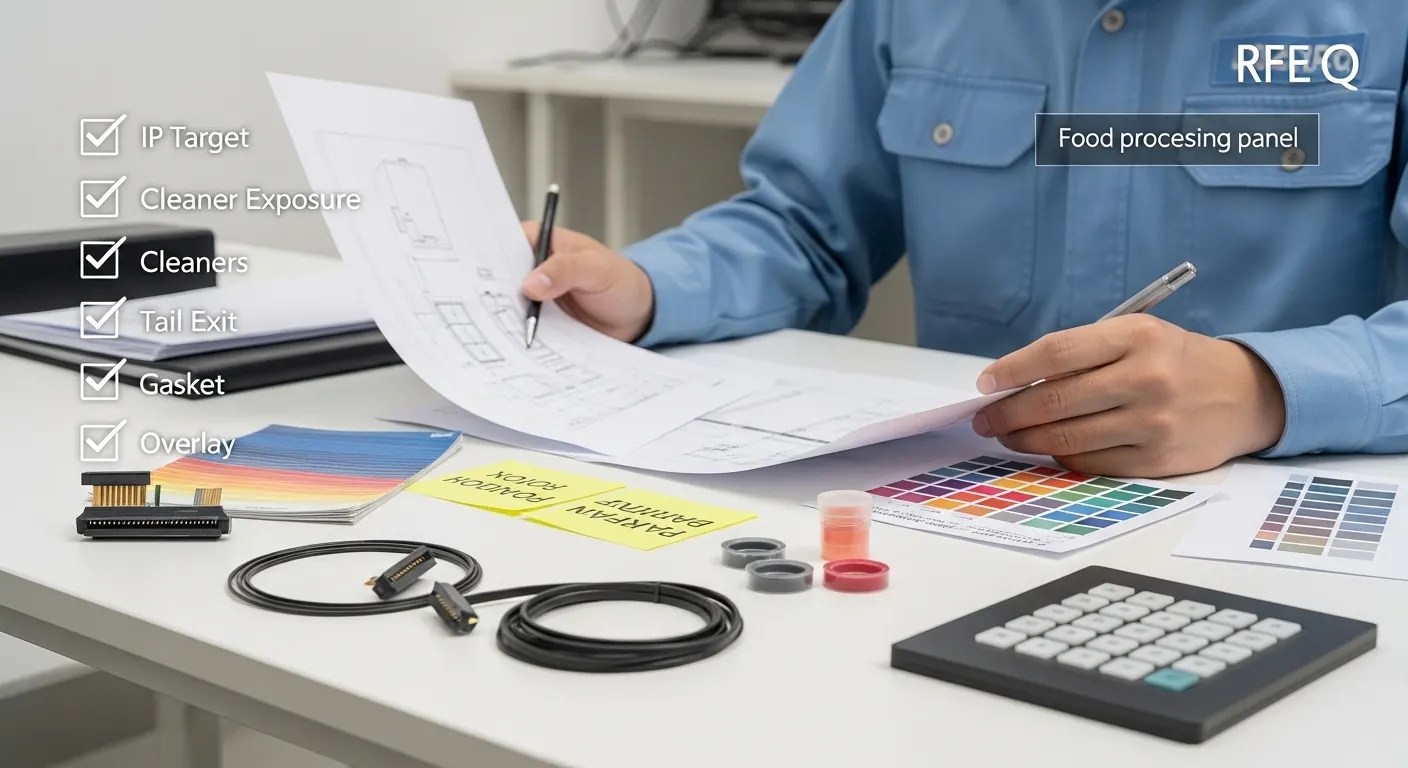
A clear RFQ helps the design studio recommend the right construction faster. It also reduces back-and-forth between engineering, procurement, and the supplier.
For a food-processing membrane panel quote, send:
For a broader RFQ preparation guide, see Niceone’s membrane switch quote request checklist.
No. IP69K is relevant for high-pressure, high-temperature washdown zones. Some equipment may only need IP65, IP66, or IP67. The right target depends on spray pressure, water temperature, cleaning angle, enclosure design, and customer test requirements.
Polyester PET is often preferred for durability and chemical-resistance needs, while polycarbonate can support strong graphics and forming options. Cleaner type, concentration, dwell time, and temperature should decide the final material choice.
Yes, antimicrobial overlay material can be specified when required. It should be treated as an optional material feature, not a replacement for cleaning. Ask for documentation if antimicrobial performance is part of the procurement requirement.
Send the cleaner name, concentration, temperature, dwell time, cleaning frequency, rinse method, and pressure level. This helps the engineering team review overlay film, printing, adhesive, gasket, and edge-seal options.
Control the full assembly, not only the front film. Review edge seal, adhesive, gasket compression, mounting surface, tail exit, connector protection, and enclosure cutout before sampling.
Yes, but the input method must be specified. Tactile domes, embossing, larger key spacing, matte finishes, and clear LED feedback can improve operation with gloves, grease, or condensation.
Send Niceone your food-processing equipment drawings, target IP rating, cleaner exposure list, sanitation zone, overlay requirements, tail and connector details, and documentation needs. Our Dongguan factory and CT office can review your specification and help prepare a custom membrane panel design for quote.
Do you have any questions, or would you like to speak directly with a representative?

