

Contact
Write to Us And We Would Be Happy to Advise You.
Do you have any questions, or would you like to speak directly with a representative?
By Fariha
Niceone-Keypad builds custom instrumentation membrane switch panels for OEM engineers designing lab analyzers, oscilloscopes, spectrometers, calibration units, benchtop meters, and other test-and-measurement equipment. If your front panel needs precise tactile feedback, a clear LCD or display window, chemical-resistant overlay materials, shielding, or a reliable connector tail, our team can review your drawing and help turn the interface into a manufacturable membrane switch design.
Instrumentation buyers usually balance three issues at once: operator feel, display readability, and long-term reliability on the lab bench. A keypad that works for a basic appliance may not be right beside sensitive measurement electronics, cleaning agents, small legends, and high-use control keys.
Niceone-Keypad combines Dongguan factory production with customer service support through our Redding, Connecticut office. Send your front-panel drawing, key layout, window details, and circuit requirements to request a quote or design review.
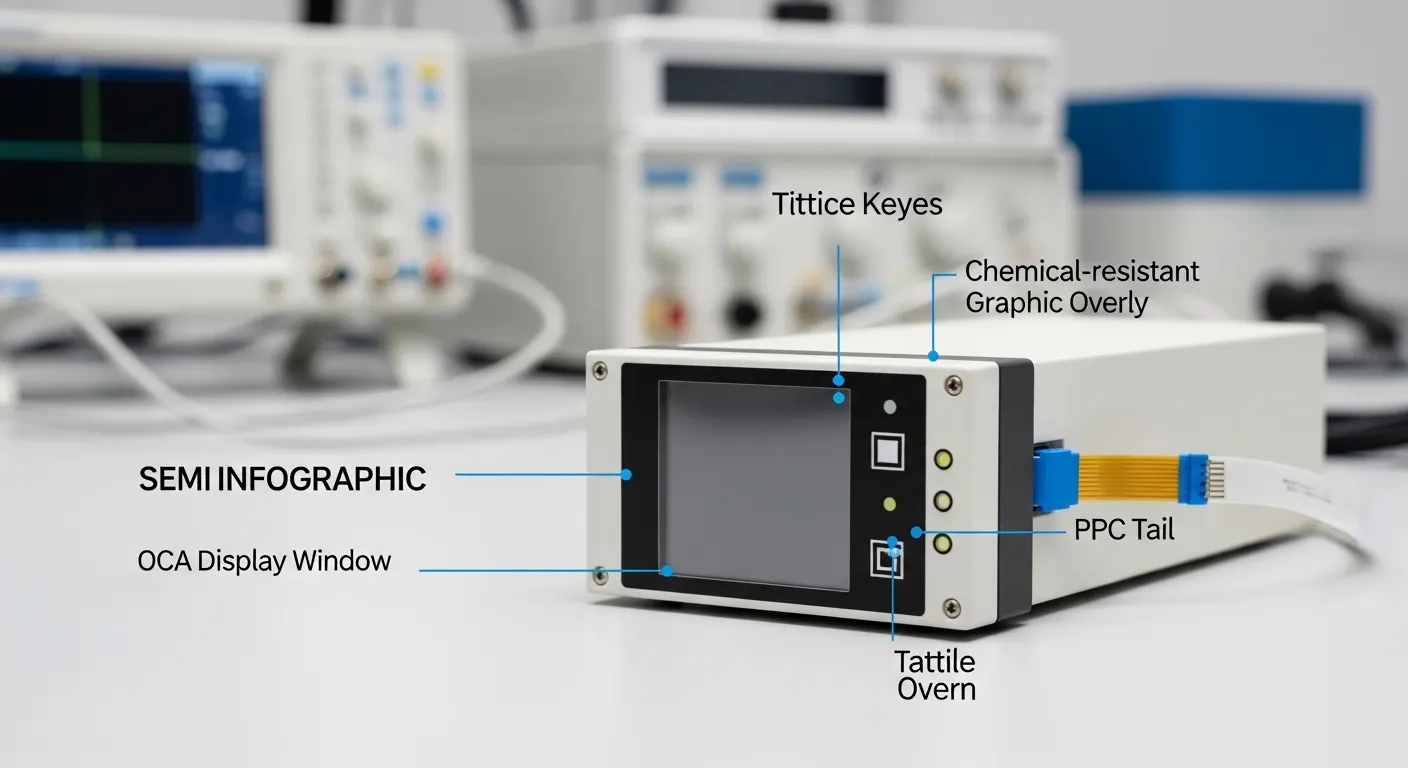
Instrumentation membrane switches are used where an operator needs clean, repeatable control of a measurement device. Typical examples include:
These panels often combine a printed graphic overlay, tactile or non-tactile switch areas, display windows, LED indicators, backlighting, shielding layers, adhesive backing, and a flexible connector tail. Some designs use printed silver circuits. Others need FPC or PCB-based construction, depending on routing, connector, mounting, and electrical requirements.
For instrument OEMs, the goal is not only to make the panel look clean. The interface must support accurate input, stable assembly, readable graphics, and consistent connection to the instrument electronics.
A standard keypad may only need basic button response and a printed overlay. Instrumentation panels usually need more design control because the operator is working with values, modes, measurements, and calibration steps.
A lab or test-equipment panel may require:
The design also needs to match how the instrument is used. A benchtop analyzer may need a smooth wipeable panel. An oscilloscope may need many fast-response keys. A calibration device may need a durable keypad with clear mode labeling and dependable feedback.
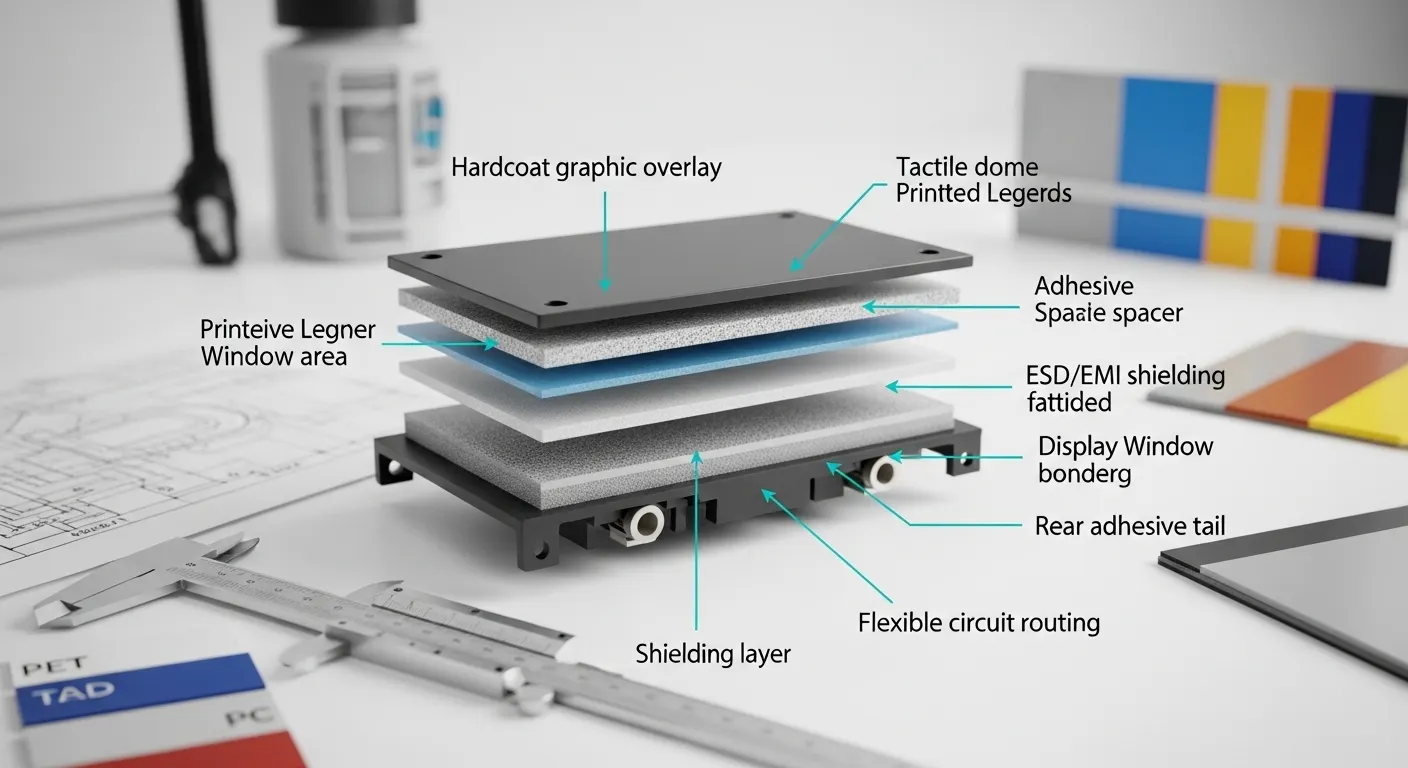
Tactile feedback matters because instrument operators often need confirmation without looking away from the display. For critical functions such as Run, Stop, Zero, Calibrate, Range, Menu, Enter, and Alarm Reset, a controlled click can reduce input uncertainty.
Niceone can support tactile and non-tactile membrane switch designs. The right choice depends on the control function, enclosure, overlay design, and user environment.
Common options include:
For RFQ, do not only send the number of keys. Share the key function list, desired operator feel, key size, embossing preference, and whether the user may wear gloves. If you already have a target actuation force or click ratio, include it. If not, Niceone can review the intended use and suggest a suitable construction direction.
Display areas are often the most visible part of an instrumentation membrane panel. A poor window design can cause bubbles, Newton rings, glare, scratches, or reduced readability.
An OCA-bonded window may be useful when the instrument needs a cleaner optical appearance across an LCD or display area. OCA bonding uses optical clear adhesive between the window and display-related layers. It can help improve the look of the window area when the design requires close bonding and clear viewing.
A conventional display window may still be enough for many instruments. It can be more suitable when the display is recessed, the window does not need full-surface bonding, or the cost target does not justify OCA bonding.
When specifying a display window, confirm:
For spectrometers, lab analyzers, and benchtop meters, display clarity often affects perceived product quality. Share the display drawing early so the window structure can be reviewed before tooling or sampling.
Instrumentation panels may face cleaning agents, fingerprints, abrasion, reagent splashes, and repeated operator contact. The overlay should be chosen around the actual environment, not only the artwork.
Common overlay decisions include:
For chemical-resistant overlay design, the most important RFQ detail is the exposure list. Tell Niceone what the panel may contact: alcohol wipes, mild cleaners, disinfectants, oils, reagents, dust, water droplets, or other substances. This helps the team recommend the overlay, printing, surface finish, and adhesive structure more responsibly.
Avoid asking for a “chemical-proof” panel without context. A better request is: “The panel will be wiped daily with alcohol-based cleaner and may face occasional reagent splash near the display.”
| Instrument type | Common operator requirement | Suggested switch direction | Display / window consideration | Overlay and reliability notes | RFQ detail to send |
|---|---|---|---|---|---|
| Oscilloscope or signal analyzer | Fast menu input and clear mode selection | Tactile keys for high-use controls, possible mixed zones | Clear LCD window, anti-glare finish if needed | ESD/EMI shielding may be important near electronics | Key map, display size, shielding need, tail exit direction |
| Spectrometer | Clean appearance and careful parameter input | Tactile or non-tactile depending on interface style | OCA-bonded or carefully treated display window | Chemical-resistant overlay for lab exposure | Window drawing, cleaning agents, key functions |
| Lab analyzer | Wipeable panel and reliable operation | Tactile critical keys with sealed flat surface | Transparent or smoked display window | Hardcoat or matte overlay based on cleaning protocol | Chemical list, IP target, adhesive surface |
| Calibration unit | Accurate confirmation for setup and reset keys | Defined tactile feedback for critical controls | Small window or LED indicator areas | Durable legends and controlled embossing | Actuation feel target, icon artwork, connector pitch |
| Benchtop power supply | Repeated adjustment and mode selection | Tactile keys plus LED indicators | LED windows or display cutout area | Scratch-resistant overlay and stable rear adhesive | LED locations, circuit pinout, housing material |
| Handheld test meter | Compact layout and durable field handling | Low-profile tactile keypad or silicone hybrid | Small LCD window | Sealing, adhesive, and tail bend design matter | Panel thickness target, tail route, sealing requirement |
Instrumentation panels often sit close to sensitive electronics. This makes electrical and mechanical details important before quoting.
Confirm whether the design needs:
Niceone can support membrane switches, FPC, PCB membrane switches, graphic overlays, dome labels, LED backlighting, light guide film, fiber optic backlighting, and waterproof membrane switch designs. The exact structure should be specified per project.
If your instrument must tolerate spills or frequent wipe-down, define the exposure. If it needs outdoor, wet, or harsh operation, state the target IP rating and mounting condition. This avoids designing a panel that looks correct but fails the real environment.
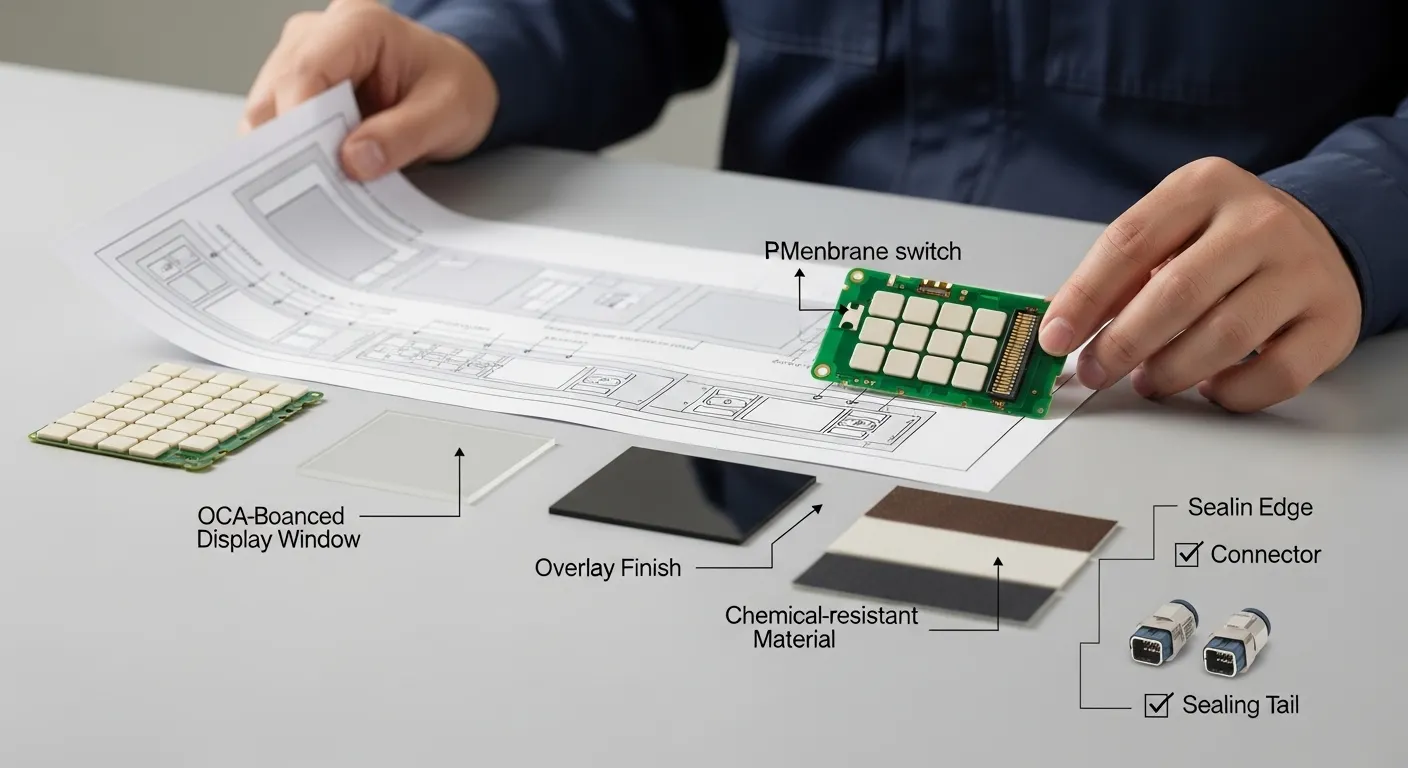
A complete RFQ helps the design studio respond with better construction feedback and a more accurate quotation. For instrumentation membrane switches, send as many of these details as possible:
You do not need to solve every detail before contacting Niceone. If you only have a front-panel concept, our team can review the application and help define the next technical questions.
Niceone-Keypad is a custom membrane switch and HMI manufacturer with production in Dongguan, China and an office at 18 Dayton Rd, Redding, CT 06896 USA. This setup helps instrument OEMs combine factory-level customization with easier communication for US-based teams.
For instrumentation projects, our team can discuss membrane switch construction, graphic overlay design, tactile dome layout, display window structure, connector tails, backlighting, waterproof sealing, and prototype review. The goal is to help your engineering and procurement teams move from rough interface requirements to a manufacturable front-panel solution.
Yes. A custom membrane switch can be designed for oscilloscopes, analyzers, meters, and calibration equipment when the key layout, tactile feel, display window, shielding, and connector tail match the instrument enclosure.
Tactile keys are useful for critical controls that need clear operator confirmation. Non-tactile or capacitive zones may work where the instrument provides visual or audio feedback, or where a smooth wipeable surface is preferred.
OCA bonding uses optical clear adhesive across the window area for a cleaner display appearance. A conventional window may use perimeter bonding or other structures. The right choice depends on display type, visual expectations, and cost target.
The best overlay depends on the exact chemicals and cleaning frequency. Share the cleaner, disinfectant, or reagent exposure list so Niceone can review PET, PC, hardcoat, matte, gloss, or textured surface options.
Many instruments benefit from ESD, EMI, or RFI shielding, especially near sensitive measurement electronics. The need depends on the circuit, enclosure, grounding design, and operating environment.
Send the panel drawing, artwork, key map, window dimensions, circuit or pinout, connector details, tail direction, material preference, cleaning exposure, IP target, and sample goals if available.
Send Niceone-Keypad your instrument type, front-panel drawing, key layout, display-window details, tactile feedback target, overlay material preference, chemical exposure, shielding need, connector pinout, tail direction, and sealing target. Our Dongguan factory and CT office can help review the design and quote a custom membrane switch panel for your lab, analytical, or test-and-measurement equipment.
Do you have any questions, or would you like to speak directly with a representative?

