

Contact
Write to Us And We Would Be Happy to Advise You.
Do you have any questions, or would you like to speak directly with a representative?
By Fariha
Niceone-Keypad designs custom military grade membrane interface solutions for defense OEM engineers, rugged equipment designers, and procurement teams that need sealed, tactile, and electrically protected HMI panels. For these projects, the key decision is not simply choosing a “military keypad.” It is defining the platform’s shock, vibration, temperature, sealing, EMI, NVIS backlighting, and gloved-use requirements before prototype and production.
Niceone supports custom membrane switches, graphic overlays, membrane keypads, silicone rubber keypads, FPC circuits, PCB-based membrane switches, LED backlighting, light guide film, fiber optic backlighting, tactile domes, and waterproof constructions from its Dongguan factory, with US support through the CT office.
This page helps defense buyers translate MIL-STD, IP, EMI, and night-operation requirements into a quote-ready membrane interface specification. Send drawings, enclosure details, and environmental requirements for engineering review.
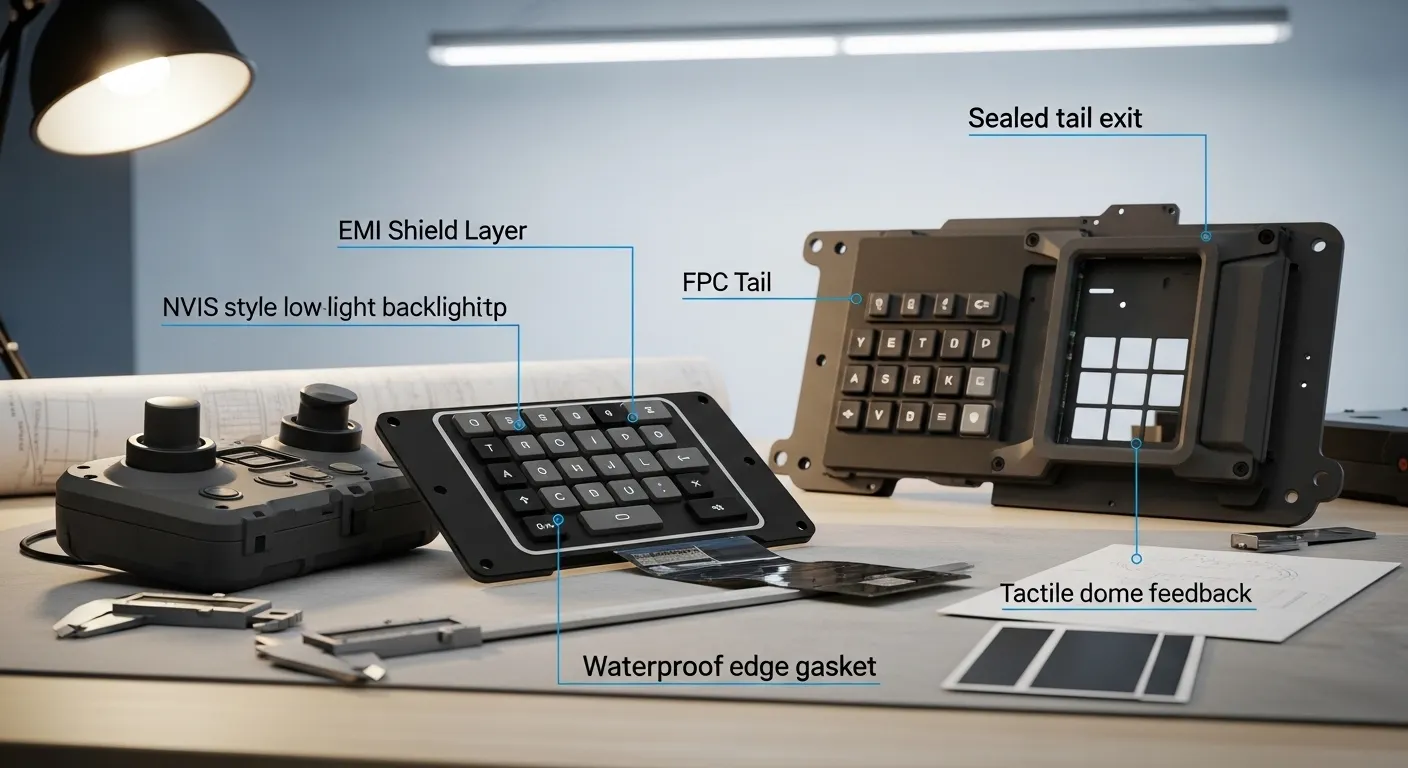
A military grade membrane interface is a custom HMI component designed around harsh-use requirements. It may be used on handheld controllers, tactical communication equipment, rugged test devices, vehicle dashboards, operator panels, or enclosure-mounted control modules.
The membrane interface may include:
For defense projects, “military grade” should be treated as a design target, not a blanket claim. Final validation depends on the buyer’s specification, test methods, enclosure design, and project documentation.
Niceone can help engineer the interface around project-specified requirements, but the buyer should define which tests, standards, and acceptance criteria apply.
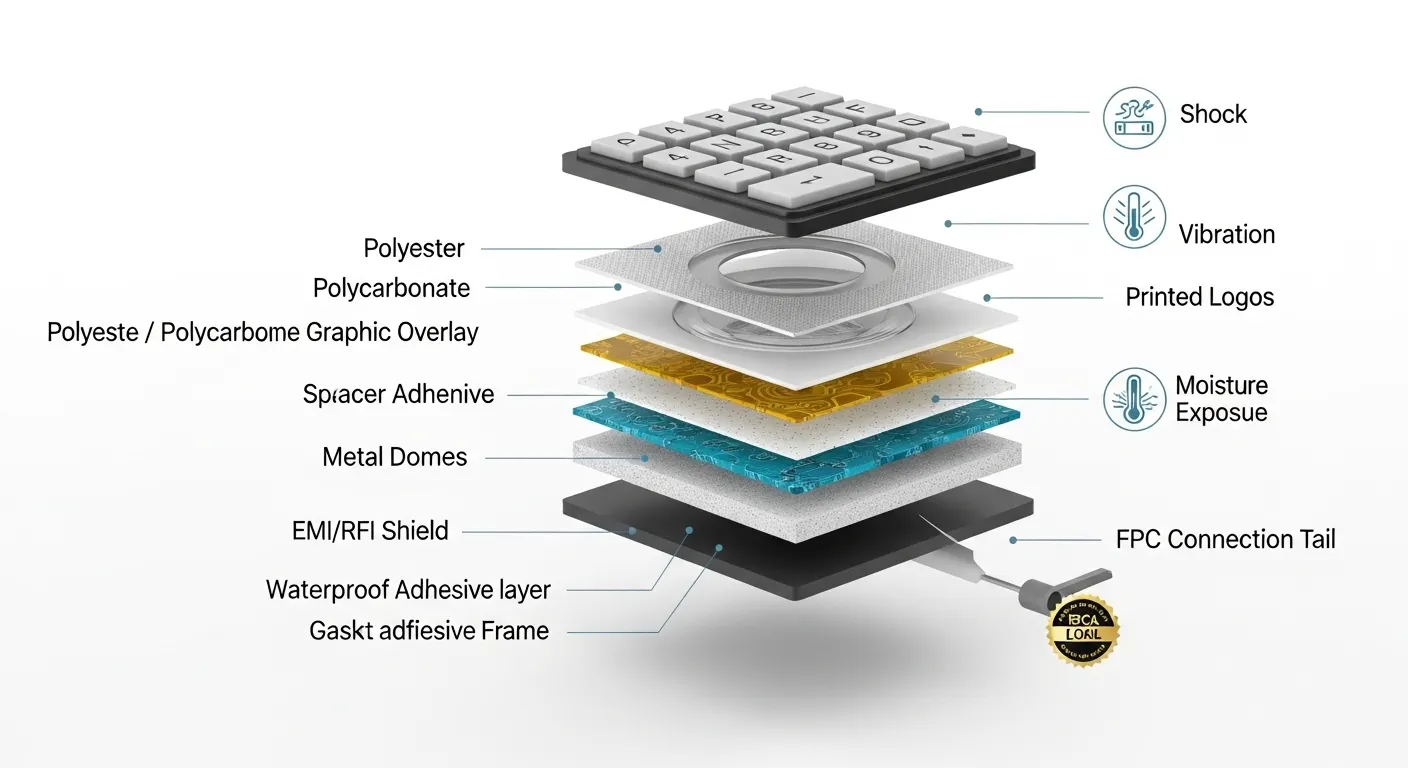
MIL-STD-810 is often referenced for environmental stress. For a membrane interface, the most relevant concerns are usually shock, vibration, temperature, humidity, dust, rain, and handling stress.
These conditions affect different parts of the HMI stack. Vibration can influence dome stability, adhesive bonding, connector retention, and tail routing. Temperature cycling can affect overlay flexibility, adhesive performance, LED behavior, and circuit reliability. Dust and moisture exposure require a stronger sealing strategy around the perimeter, tail exit, display window, and enclosure joint.
For vehicle-mount interfaces, vibration and connector retention often need more attention. For handheld devices, grip, impact, cable strain relief, and water exposure may become more important.
Useful design inputs include:
For rugged field instrumentation, similar environmental planning may also apply. Niceone’s related page on instrumentation membrane switches may help buyers compare rugged HMI requirements for test and measurement equipment.
Defense HMI panels may be installed near radios, power systems, vehicle electronics, displays, control modules, or communication equipment. In these cases, the membrane interface should be reviewed for EMI, RFI, and ESD risk.
A membrane keypad can support shielding through a printed silver grid, full-surface conductive layer, conductive mesh, copper layer, or other project-specific shield design. The shielding layer must also have a clear grounding path. Without a defined ground tail, contact point, or enclosure bonding method, the shield may not perform as intended.
Buyers should specify:
MIL-STD-461 is often discussed in defense electronics, but it normally applies at equipment or subsystem level. A membrane interface can be designed to support the shielding strategy, but system performance depends on the full assembly.
For communication hardware and EMI-sensitive interface projects, see Niceone’s telecom equipment membrane switch page.
A backlit military membrane keypad can support night operation, but NVIS compatibility requires more than adding green LEDs. Defense buyers should define the applicable NVIS requirement, lighting color, brightness range, legend readability, and test expectations.
Depending on the project, Niceone can review backlighting options such as:
Light bleed is a common design risk. It can appear around legends, key edges, windows, or spacer cutouts. For NVIS-sensitive interfaces, the artwork, spacer, adhesive, LED placement, and overlay opacity should be reviewed together.
The RFQ should state whether the buyer needs standard backlighting, low-light readability, or project-specific NVIS-compatible performance. If the project references MIL-STD-3009 or another lighting requirement, include that document or requirement summary during design review.
IP67 and IP68 sealing depend on the full membrane interface design, not only the overlay material. The adhesive frame, tail exit, connector area, circuit stack, enclosure surface, and installation method all affect water and dust resistance.
For a defense membrane panel, the highest sealing risk often appears at:
Niceone can support waterproof membrane switch design, but IP67 or IP68 targets should be reviewed early. Higher IP targets may require wider adhesive borders, sealed tail construction, gasket design, potting, enclosure coordination, or third-party testing.
The buyer should clarify whether the product needs rain resistance, splash protection, temporary immersion, long-term immersion, dust sealing, or cleaning resistance. These conditions are not the same, and they can lead to different design choices.
| Defense requirement | Why it matters in use | Membrane interface design lever | RFQ input to send | Validation to discuss |
|---|---|---|---|---|
| Shock and vibration | Vehicle movement, drops, impact, rough handling | Dome selection, adhesive stack, connector retention, tail routing | Mounting method, vibration profile, enclosure drawing | Project test method and acceptance criteria |
| Temperature exposure | Cold start, hot enclosure, outdoor storage | Overlay material, adhesive, circuit, LED selection | Operating and storage range | Temperature cycling or storage test |
| EMI/RFI/ESD control | Radios, electronics, control modules | Shield layer, ground tail, conductive mesh/grid | Grounding scheme, EMC target, enclosure material | System-level EMC test plan |
| NVIS / night operation | Low-light or night-vision use | Filtered LED, LGF, fiber optic, light-blocking layers | NVIS requirement, brightness, color, legend layout | Optical or NVIS verification |
| IP67/IP68 sealing | Rain, dust, immersion, field exposure | Adhesive border, gasket, tail seal, enclosure interface | IP target, exposure type, tail exit | Third-party IP test if required |
| Gloved operation | Fast input with tactical gloves | Dome force, key size, embossing, spacing | Glove type, actuation preference, layout | Prototype tactile review |
Handheld defense HMI usually needs compact layout, secure grip, sealed cable exit, low-power backlighting, and tactile feedback that works with gloves. The keypad may face drops, outdoor exposure, and repeated handling.
Vehicle-mount HMI often requires stronger vibration planning, larger legends, better sunlight readability, EMI bonding, connector retention, and a stable mounting surface. Back panels, stiffeners, PCB assemblies, or display windows may also be part of the design.
For both formats, engineers should review the interface as part of the full enclosure. A sealed membrane keypad cannot compensate for a weak housing joint, poor cable strain relief, or an undefined grounding path.
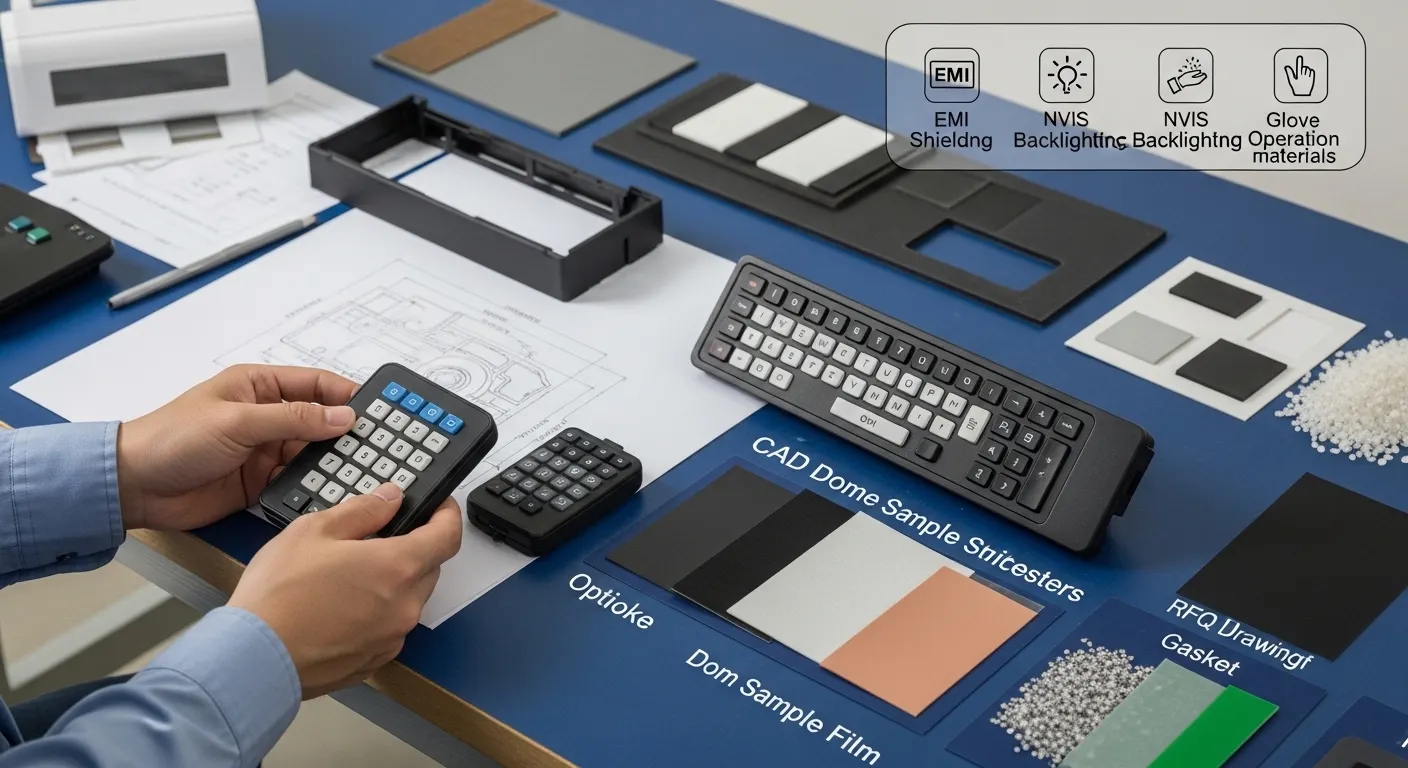
A clear RFQ helps Niceone recommend the right membrane stack, materials, backlighting, circuit, and sealing path. For military HMI projects, send as much project context as possible.
Include:
Niceone supplies custom membrane interface components to buyer requirements. These are not finished off-the-shelf defense systems. Export-control or ITAR classification should be reviewed by the buyer based on project use, destination, and contract requirements.
Niceone-Keypad combines custom HMI design support with membrane switch production from Dongguan, China, and customer service support through the Redding, Connecticut office.
The team can review drawings and help specify:
For military grade membrane interface projects, the most useful starting point is a design review. Niceone can help identify sealing risks, shield grounding questions, backlight uniformity issues, tail-routing limits, and tactile-feedback concerns before prototype tooling or sample production.
A membrane interface can be designed around project-specified MIL-STD-810 conditions, but final compliance depends on the test method, enclosure, assembly, and acceptance criteria. Avoid treating “MIL-STD” as a generic label.
EMI shielding may use a conductive layer, printed silver grid, copper layer, mesh, or grounding tail. The grounding path must be defined with the enclosure and electronics team.
NVIS-compatible backlighting requires project-specific control of color, luminance, spectral output, legend readability, and light bleed. The buyer should send the applicable lighting requirement or test reference.
Yes, but the design must support it. Adhesive border, tail exit, gasket, connector area, enclosure surface, and test method all affect IP67 or IP68 performance.
It depends on routing, durability, cost, connector style, and electronics integration. Silver flex, FPC, copper flex, and PCB-based membrane switches each fit different project needs.
Send drawings, enclosure details, IP target, environmental requirements, shielding needs, backlighting requirements, dome force preference, circuit type, connector details, quantity target, and any required validation documents.
Send Niceone your military HMI drawings, enclosure details, IP target, EMI/RFI/ESD requirements, NVIS or backlighting needs, dome-force preference, circuit type, connector plan, and project test expectations. Our Dongguan factory and CT office can review your specification and help prepare a custom membrane interface quote for prototype or production.
Do you have any questions, or would you like to speak directly with a representative?

