

Contact
Write to Us And We Would Be Happy to Advise You.
Do you have any questions, or would you like to speak directly with a representative?
By Fariha
Niceone-Keypad designs and manufactures flexible printed circuit keypad assemblies for OEM engineers who need the right circuit substrate before releasing a new membrane switch project for quote. If your keypad needs fine-pitch routing, low resistance, soldered LEDs, compact tails, or stable signal paths, copper FPC may be the right choice. If the design is simple, low-current, and cost-sensitive, printed silver on PET may still be the smarter option.
This page is for hardware engineers, product designers, and procurement teams comparing FPC, printed silver, and PCB-based membrane switch circuits. Niceone’s Dongguan factory and Connecticut office can review your drawings, pinout, overlay artwork, connector plan, backlighting needs, and sealing target before recommending a circuit build.
The goal is simple: choose the circuit type that meets the electrical, mechanical, and budget requirements without over-specifying the keypad.
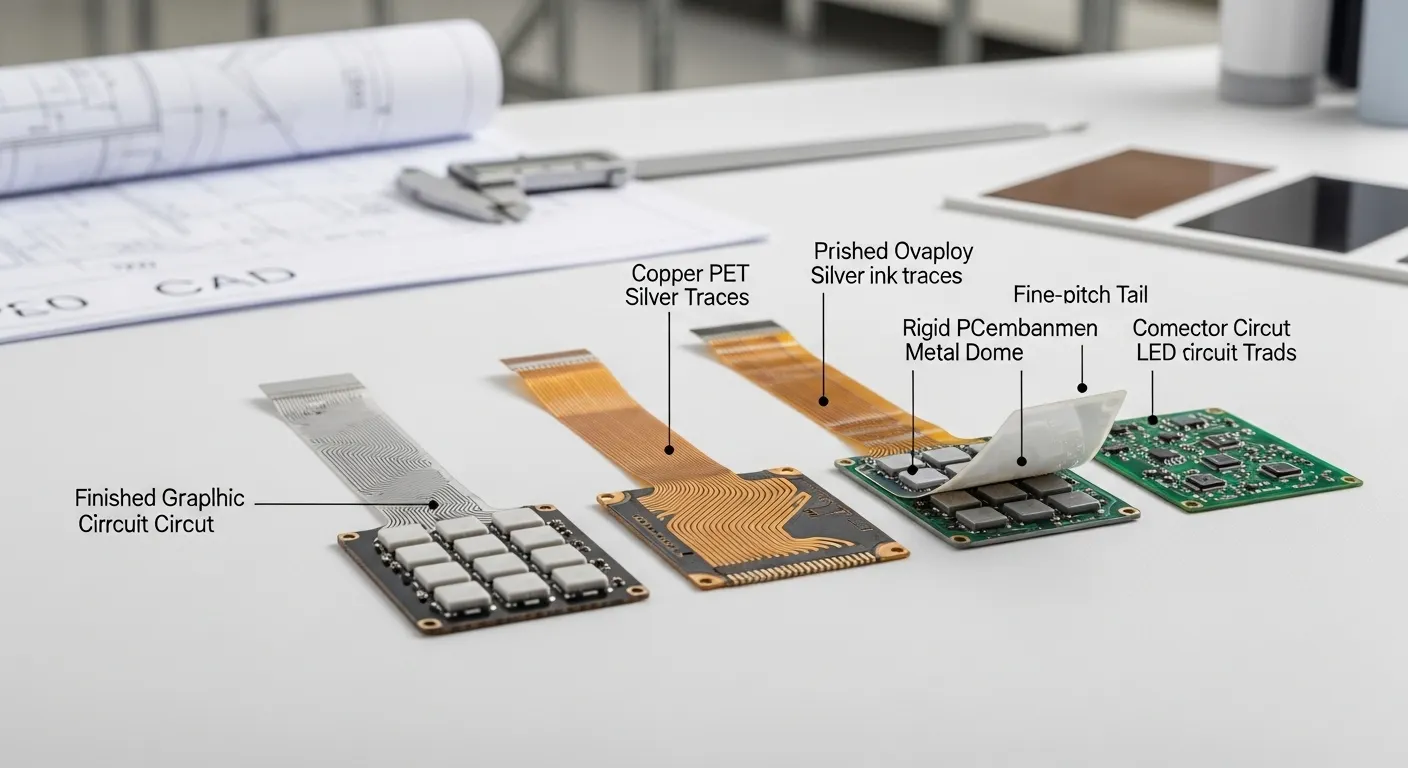
A flexible printed circuit keypad should use copper FPC when the circuit layout needs more than a simple printed switch matrix. Copper traces provide lower resistance than printed silver ink and support tighter routing in compact HMI designs.
FPC is often the better option when the keypad includes:
Copper FPC is commonly built on polyimide, often known by the Kapton material family. It can support etched copper traces, plated contact areas, connector stiffeners, and soldered components. For engineers designing compact medical controls, industrial handsets, instrumentation panels, marine electronics, or vehicle HMI modules, those details can matter more than the lowest unit cost.
The key question is not whether FPC is “better” in every project. The question is whether the keypad’s electrical load, routing density, connector design, and assembly method justify the FPC construction.
Printed silver PET remains a strong choice for many membrane keypads. It is usually more cost-efficient for simple keypad layouts, especially when the circuit only carries low-current signals and does not need dense copper routing.
A printed silver circuit may fit better when the design has:
Silver ink traces are printed onto polyester film. This structure works well for many membrane panels, control overlays, appliance keypads, HVAC controls, and industrial operator panels. It also keeps the stack thin and flexible.
However, printed silver can become less suitable when the keypad needs very tight trace spacing, component soldering, or lower resistance over a more complex path. In those cases, copper FPC may reduce layout risk and improve design flexibility.
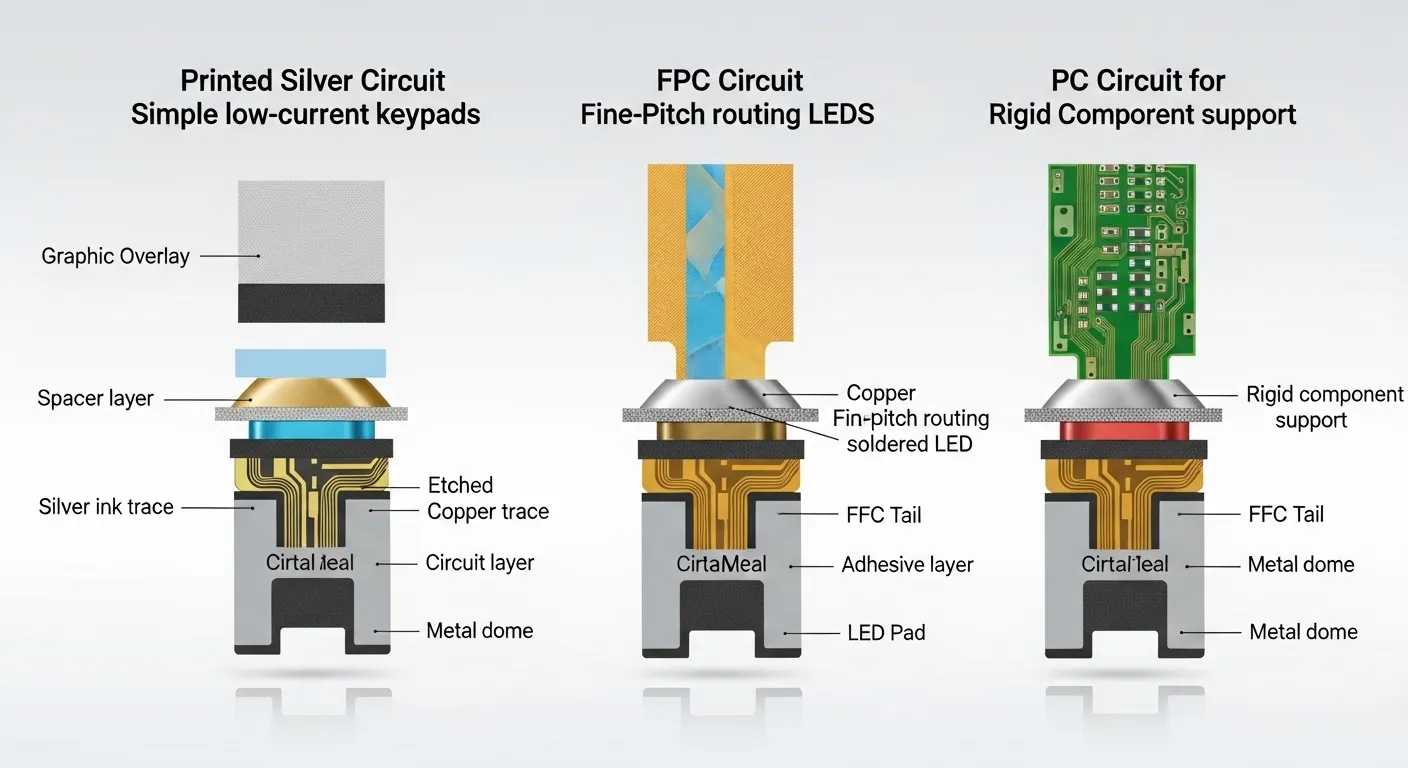
The circuit choice should follow the application, not a generic preference. A buyer may ask for an FPC keypad, but the final recommendation may be printed silver, copper FPC, or PCB after the drawing review.
| Project scenario | Best circuit choice | Why it fits | Watch-outs | RFQ details to send |
|---|---|---|---|---|
| Simple, cost-sensitive indoor keypad | Printed silver PET | Lower-cost option for low-current switch matrices | Not ideal for very fine pitch or soldered components | Overlay artwork, switch matrix, tail exit, quantity target |
| Compact keypad with tight routing | Copper FPC | Supports fine traces, compact tails, and lower resistance | Higher cost than printed silver | Pinout, connector pitch, tail length, bend path |
| Keypad with LEDs or soldered components | Copper FPC or PCB | Better for soldered parts and controlled electrical paths | Component height may affect stack design | LED layout, resistor/component plan, backlight target |
| Keypad needing rigid support or PCBA integration | PCB membrane switch | Good for rigid mounting, board components, and connectors | Less flexible than FPC | Board outline, mounting points, BOM, connector location |
If the project needs a rigid circuit base, board-mounted parts, or stronger mechanical support, review Niceone’s PCB membrane switch circuit build page before finalizing the substrate.
Before selecting the circuit type, confirm the electrical and layout constraints. These details often decide whether printed silver is enough or copper FPC is safer.
Check these items early:
For many projects, the connector tail becomes the deciding point. A simple membrane switch may use a standard flexible tail. A compact product may need a narrower pitch, a longer route, or a bend path that works better with an FPC construction.
The mounting surface also matters. A keypad mounted to a curved housing, recessed panel, handheld device, or sealed enclosure may require different adhesive, tail exit, and stiffener choices.
The circuit layer affects the full membrane switch stack. Engineers should review the circuit together with the overlay, spacer, dome design, adhesive, shielding, and backer.
A typical FPC keypad stack may include:
If the product needs a molded rubber interface above the circuit, the FPC can be reviewed together with the top keypad design. For rubber-key integration, see Niceone’s silicone rubber keypad supplier page.
Waterproofing is not automatic because a design uses FPC. Sealing depends on the overlay, adhesive, tail exit, venting, enclosure surface, and test target. If the buyer needs IP65, IP67, or another sealing goal, it should be specified before tooling and sampling.
Backlighting and tactile feedback can push a design toward FPC or PCB. If the keypad includes soldered LEDs, resistors, or light-control features, copper FPC may provide a more practical circuit path than printed silver.
Confirm these design points before choosing the circuit:
For tactile key arrays, dome placement must match the overlay graphics, spacer openings, and circuit contacts. If the project uses separate dome arrays or dome decals, review the tactile construction with Niceone’s dome label custom printing decals page.
The safest approach is to review the backlighting, dome feel, and circuit together. A circuit that works electrically may still fail the user-experience target if LED hotspots, dome force, or overlay embossing are not coordinated.
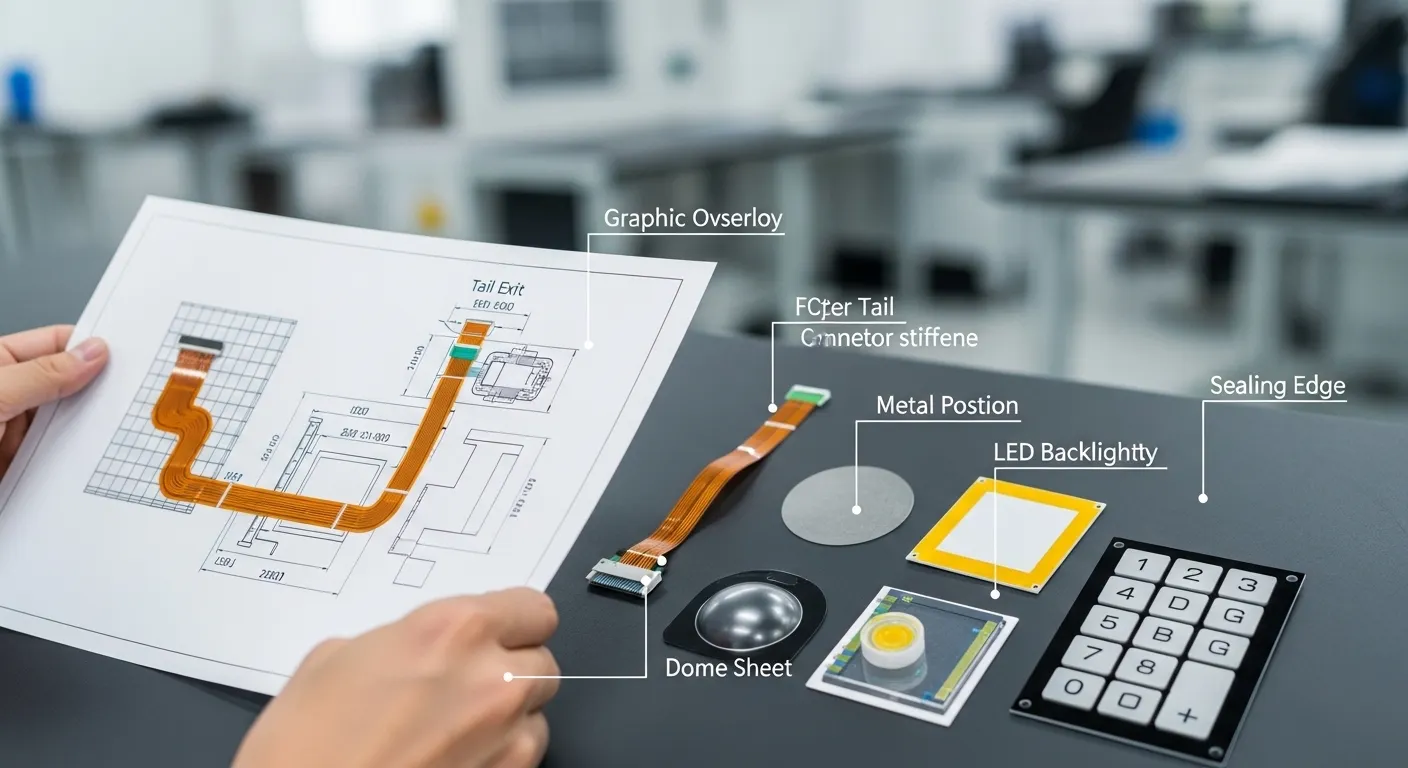
A good RFQ helps the engineering team recommend the right substrate faster. Send the circuit requirements with the mechanical and visual design, not as separate decisions.
For a flexible printed circuit keypad RFQ, include:
If the buyer is unsure whether to choose FPC, printed silver, or PCB, Niceone can review the same drawing against each circuit option. That avoids overbuilding a simple keypad or under-specifying a compact design.
Niceone-Keypad reviews flexible printed circuit keypad projects as part of the full membrane switch design. The team checks the circuit path, tail exit, connector choice, overlay artwork, tactile feel, backlighting, adhesive, and sealing target before production.
The Dongguan factory supports custom membrane switches, graphic overlays, FPC circuits, PCB-based membrane switches, backlighting, tactile and non-tactile switches, waterproof membrane panels, and related HMI parts. The Connecticut office supports US-based communication for buyers who need clearer coordination during design review and procurement.
A practical review may compare:
This review should happen before final quoting. Small changes to connector pitch, tail direction, dome layout, or LED position can change the best circuit choice.
No. FPC is better for fine pitch, lower resistance, soldered components, and compact routing. Printed silver PET can be better for simple, low-current, cost-sensitive membrane keypads.
Choose copper FPC when the keypad needs tight routing, lower circuit resistance, fine connector pitch, soldered LEDs, or a more complex tail path. Silver ink is often enough for simpler switch matrices.
Yes, FPC or PCB constructions are often better suited for soldered LEDs, resistors, and small components. The final choice depends on component height, circuit layout, backlighting plan, and assembly space.
Use FPC when flexibility and compact routing matter. Use PCB when the keypad needs rigid support, heavier board-mounted components, or stronger connector mounting.
Send overlay artwork, dimensions, circuit schematic or pinout, connector pitch, tail direction, backlighting details, dome requirements, adhesive surface, sealing target, and estimated quantity.
Yes, but sealing depends on the full stack. Overlay material, adhesive, tail exit, enclosure surface, and validation target all affect the final waterproof or dust-proof design.
Send your flexible printed circuit keypad drawings to Niceone-Keypad for review. Include the circuit schematic, pinout, connector pitch, tail exit, LED or component requirements, overlay artwork, dome feel target, sealing goal, application environment, and quantity estimate. Our Dongguan factory and Connecticut office can help compare FPC, printed silver PET, and PCB options before quoting your custom membrane switch.
Do you have any questions, or would you like to speak directly with a representative?

