

Contact
Write to Us And We Would Be Happy to Advise You.
Do you have any questions, or would you like to speak directly with a representative?
By Fariha
Niceone-Keypad is a silicone rubber keypad supplier for OEM engineers and procurement teams designing tactile-heavy HMI controls, handheld devices, instrument panels, appliance interfaces, and industrial equipment. Our Dongguan factory supports custom molded silicone keys with project-specific hardness, conductive contact options, printed or laser-etched legends, coatings, and backlit translucent silicone designs. Buyers can send drawings, PCB details, keypad layout, and tactile requirements for engineering review and quotation.
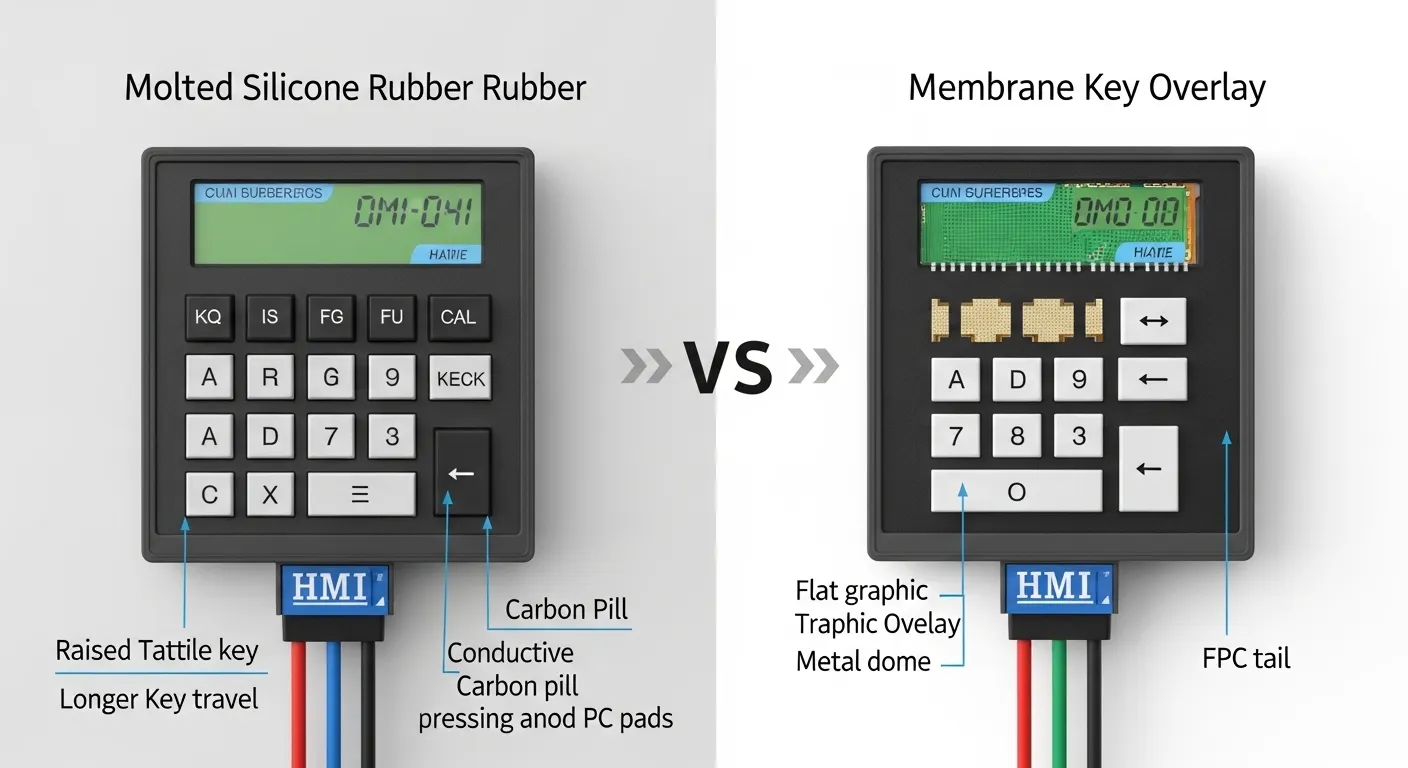
This page helps you decide whether a molded silicone keypad or a membrane keypad is the better construction for your product. Silicone is often selected when the interface needs raised keys, longer travel, strong finger feedback, molded color buttons, or a sealed rubber feel. A membrane switch is usually better when the design needs a flat, low-profile front panel with a graphic overlay surface.
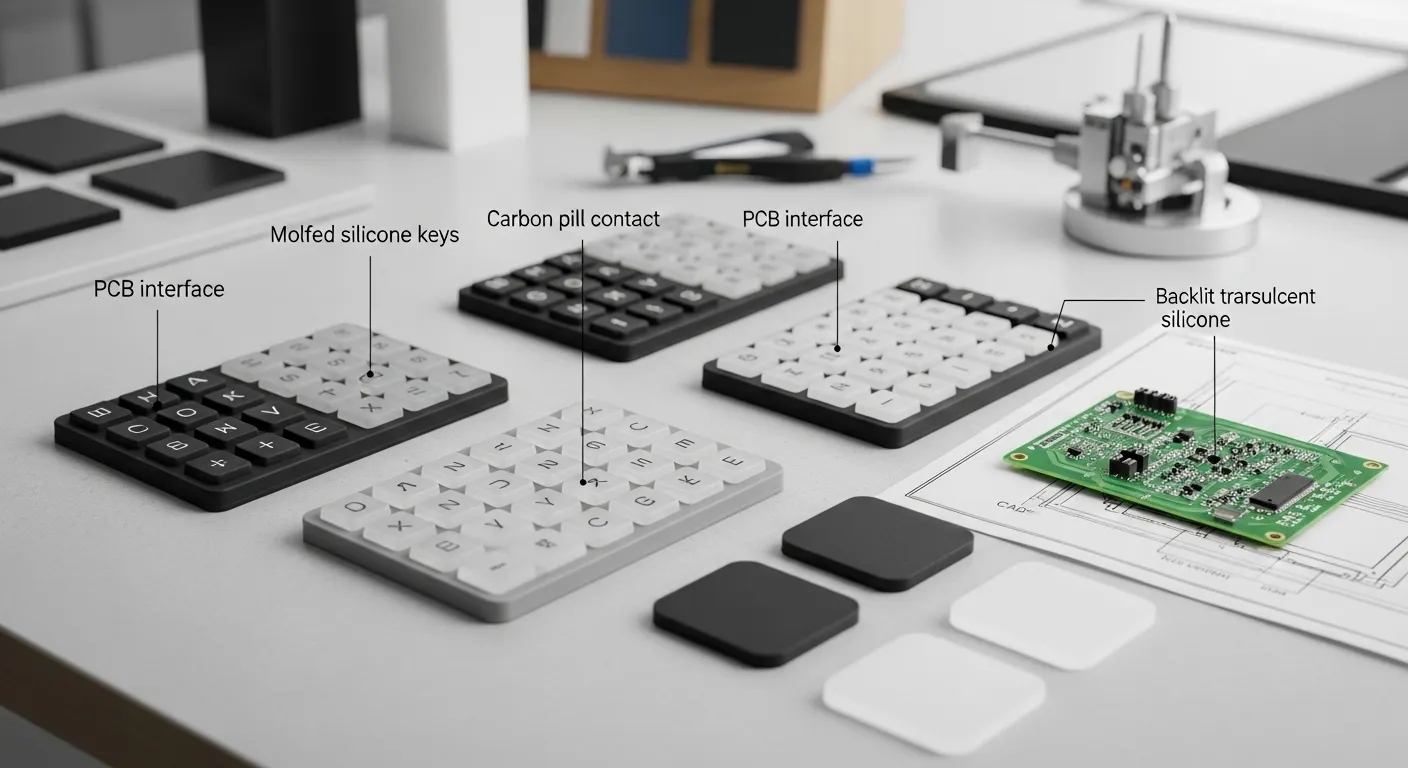
Custom silicone rubber keypads are built around the feel of the user interface. Instead of a flat printed overlay, the keys are molded into a three-dimensional rubber part. This allows the designer to control key height, shape, spacing, surface texture, color, travel, and tactile response.
Niceone-Keypad supports silicone rubber keypad projects for OEM control panels, test instruments, marine electronics, HVAC controls, medical device interfaces, automotive auxiliary controls, home appliances, and industrial handheld devices. Depending on the product design, the keypad may work with:
The right design depends on the product housing, PCB layout, user environment, sealing target, and tactile expectation. For this reason, a good RFQ should include more than a key layout. It should also include how the keypad must feel, light, seal, and connect.
Choose a silicone rubber keypad when the user needs a raised, tactile, finger-friendly control surface. Silicone keys can be molded into different shapes, heights, colors, and textures. This makes them useful for products where operators press the same keys repeatedly or need feedback without looking directly at the panel.
A membrane keypad is often better when the product needs a thin, flat, sealed front surface. It can use a printed graphic overlay, tactile domes, embossed keys, windows, and integrated circuitry. If your design depends on a printed front-panel look, a membrane switch may be more suitable. For overlay material choices, see Niceone’s guide to polycarbonate membrane switch overlays.
Silicone and membrane designs can also be combined. For example, a silicone keypad may sit over a PCB, while a membrane switch may use a graphic overlay and metal dome circuit. The best choice depends on the user experience and mechanical layout.
| Buyer question | Choose silicone rubber keypad when… | Choose membrane keypad when… | RFQ detail to send |
|---|---|---|---|
| Does the user need strong tactile feel? | The interface needs raised keys, longer travel, or a soft rubber response. | The design needs low-profile tactile domes or a flatter press feel. | Target key travel, actuation feel, and reference sample if available. |
| Is the front panel flat or 3D? | The product needs molded keys, curved buttons, or ergonomic shapes. | The product needs a flat printed panel with windows or icons. | 2D/3D drawing, housing model, and key height limit. |
| How important is the printed appearance? | Legends are simple, molded, printed, or laser-etched on keys. | The front surface needs detailed graphics, branding, icons, or display windows. | Artwork, colors, legend method, and display window needs. |
| Does the design need backlit keys? | Translucent silicone, coating, and laser etching can support lit legends. | Backlighting may use LEDs, light guide film, or other membrane panel methods. | LED location, light color, legend area, and brightness expectations. |
| What is the assembly structure? | The keypad presses carbon pills, domes, or PCB tact switches. | The switch circuit is built into flexible membrane layers. | PCB/FPC layout, contact type, connector, and assembly stack-up. |
Silicone keypad feel is influenced by hardness, key geometry, web design, travel, actuation force, and contact structure. Many projects discuss silicone hardness within a Shore A 30–70 range, but the final selection should be confirmed against the product’s feel, key size, environment, and molding requirements.
Softer silicone can create a more flexible feel. Harder silicone can feel more stable and resistant. However, hardness alone does not define the press response. The web area under each key, key height, wall thickness, and actuator design also affect the result.
Before requesting a quote, define:
If the project is still early, Niceone’s team can review the drawing and help identify which tactile variables should be confirmed before tooling.
The contact method determines how the silicone key closes the circuit. For many silicone rubber keypad designs, a conductive carbon pill is molded or attached under the key. When the user presses the key, the pill touches conductive pads on the PCB and completes the circuit.
Printed carbon can also be used in some designs. It may suit layouts where the contact shape, thickness, or cost structure differs from a solid carbon pill. Metal domes can create a sharper tactile click, while PCB tact switches can be used when the electronics already require a discrete switch component.
Common options include:
For the best RFQ result, send the PCB pad layout or circuit interface early. This helps confirm contact size, key position, and alignment.
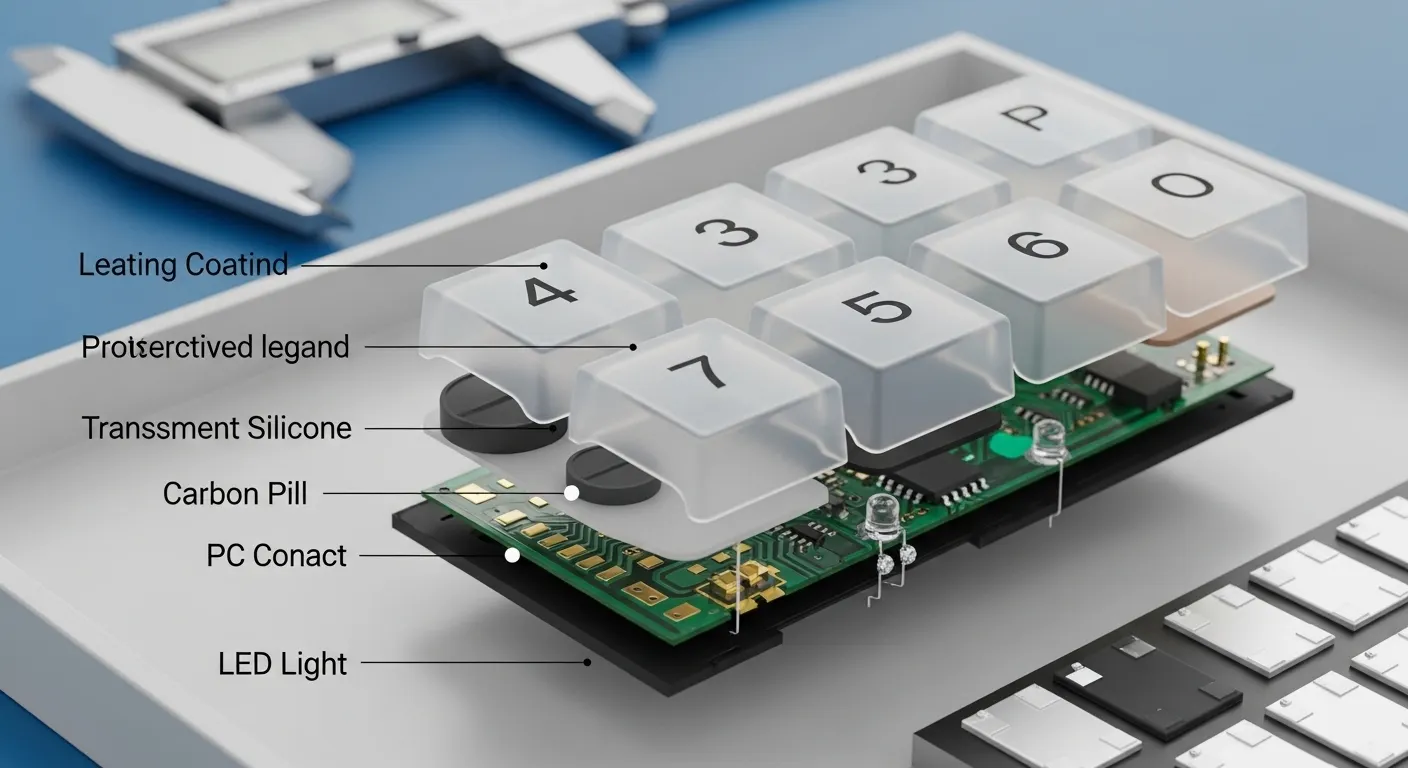
Silicone keypad legends can be printed, laser-etched, molded, or combined with coatings. The right choice depends on wear exposure, lighting, appearance, and budget.
Printed legends work well for many standard interfaces. Laser-etched legends are often considered when the keypad uses translucent silicone or a coated surface for backlit keys. In this structure, light passes through the etched legend area while the surrounding coating controls light bleed.
Backlit translucent silicone is useful for night use, industrial control rooms, marine consoles, handheld instruments, automotive auxiliary controls, and appliance panels. The design should confirm LED position, light color, key thickness, coating coverage, legend size, and whether the buyer expects even illumination.
For products that depend heavily on printed front-panel artwork, a membrane switch or graphic overlay may be a better fit. Niceone also supports graphic overlay manufacturing for HMI panels.
A clear RFQ helps the factory review tooling, molding, contact structure, printing, and assembly requirements. It also reduces back-and-forth between engineering and purchasing.
Send the following details when available:
If your project needs RoHS-related documentation for the complete HMI assembly, review Niceone’s RoHS membrane switch guidance.
Niceone-Keypad combines custom HMI manufacturing in Dongguan, China, with US office support in Redding, Connecticut. This structure helps international buyers discuss drawings, samples, design expectations, and production requirements with a supplier that understands both engineering details and export communication.
Our product range covers silicone rubber keypads, membrane switches, graphic overlays, backlighting solutions, FPC circuits, PCB-based membrane switches, tactile and non-tactile designs, and waterproof membrane switch assemblies. That matters when your product may need more than one input technology.
For example, one device may use molded silicone keys over a PCB. Another may need a flat membrane panel with a printed overlay. A third may need backlit keys, sealing, and a custom housing interface. Niceone can review the design direction and help confirm which construction path is more suitable before quoting.
Yes. Backlit silicone keypads often use translucent silicone, coating, and laser-etched legends. LED position, key thickness, coating coverage, and light bleed control should be reviewed before tooling.
Many projects discuss Shore A 30–70, but the best hardness depends on key size, travel, feel, and environment. Send a target feel or reference sample if available.
A conductive carbon pill sits under the silicone key. When pressed, it touches PCB pads and completes the circuit. It is a common contact option for rubber keypads.
Silicone is better for raised keys, molded shapes, and strong tactile feel. A membrane switch is better for a thin, flat, printed, sealed front panel.
Send 2D or 3D drawings, keypad layout, PCB pad layout, hardness target, contact preference, legends, colors, backlighting needs, sealing target, and quantity stage.
Yes, silicone can support gasket-style and molded sealing concepts. The final sealing approach depends on the housing, PCB, compression area, and target IP requirement.
Send Niceone-Keypad your keypad drawing, PCB or FPC interface, target Shore A hardness, tactile feel requirement, carbon pill or dome preference, legend method, backlighting plan, sealing target, color reference, and prototype or production quantity.
Our Dongguan factory and CT office can help review whether a molded silicone keypad, membrane keypad, or hybrid HMI structure is the right path for your product.
Do you have any questions, or would you like to speak directly with a representative?

