

Contact
Write to Us And We Would Be Happy to Advise You.
Do you have any questions, or would you like to speak directly with a representative?
By Fariha
Niceone-Keypad is a graphic overlay manufacturer for OEM product engineers, industrial designers, and procurement teams that need custom printed front panels for membrane switches, HMI panels, keypads, displays, and equipment interfaces. Our team helps buyers define the right print method, overlay material, Pantone or RAL color reference, embossing layout, surface finish, adhesive backing, and sample requirements before production.
A graphic overlay is not just a label. It protects the interface, carries the brand design, guides the user, and affects how buttons, windows, LEDs, and displays perform in the final product. For a new product run, the best result starts with clear artwork, material selection, print planning, and sample approval.
Niceone manufactures custom graphic overlays through our Dongguan factory, with support from our CT office for US-based communication. Send your drawing, artwork, color reference, housing details, and expected use environment, and our team can review the build path for quotation and sampling.
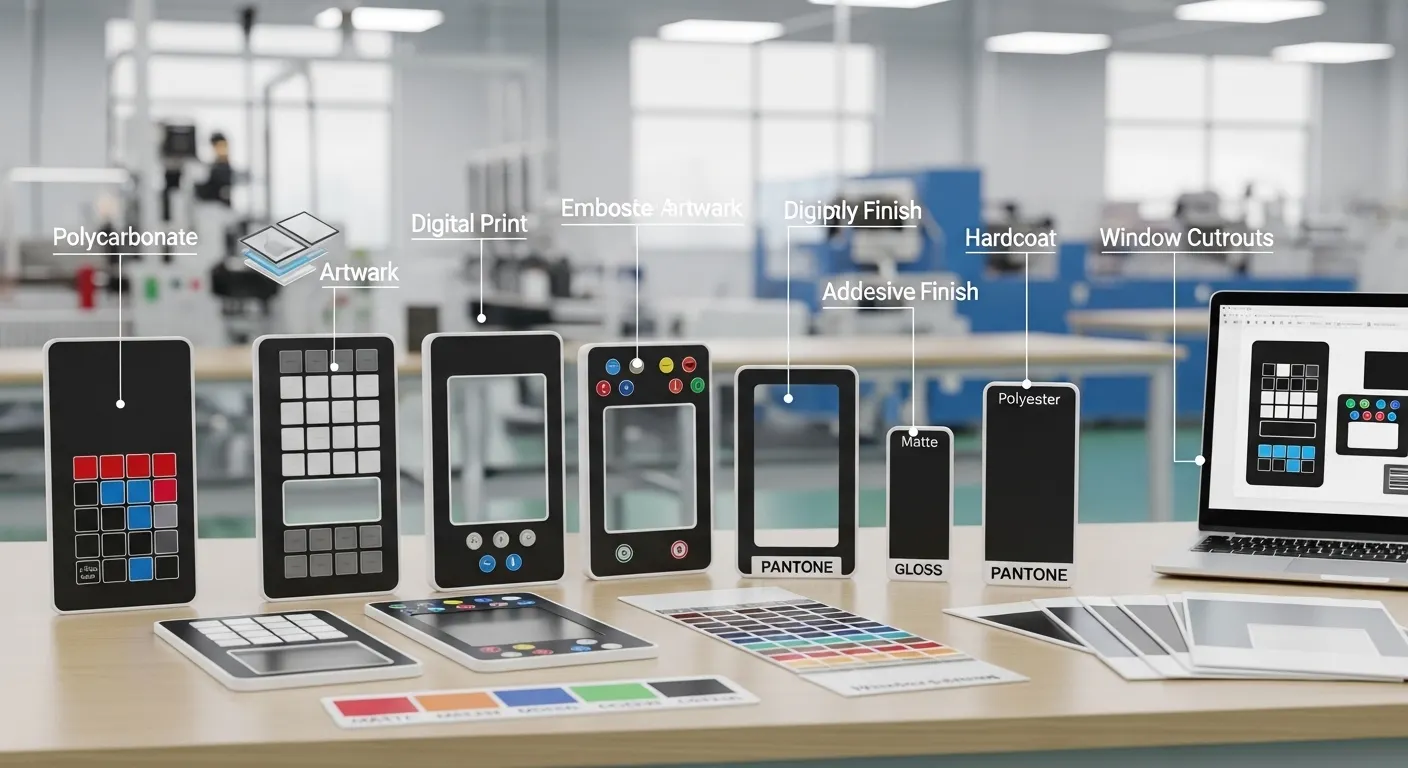
Niceone produces custom graphic overlays for membrane switches, membrane keypads, capacitive switch panels, silicone rubber keypad assemblies, control panels, and equipment front panels. The overlay can include printed legends, logos, icons, warning marks, LED windows, display windows, dead-front icons, embossed areas, and adhesive backing.
For OEM buyers, the main question is not only “Can you print this?” The real question is whether the printed overlay will match the product design, bond to the housing, survive the operating environment, and align with the electrical or mechanical interface underneath.
Common overlay requirements include:
If the overlay is the top layer of a membrane switch, our team can also review the relationship between the printed overlay, spacer, tactile dome, circuit layer, backlighting, and final assembly.
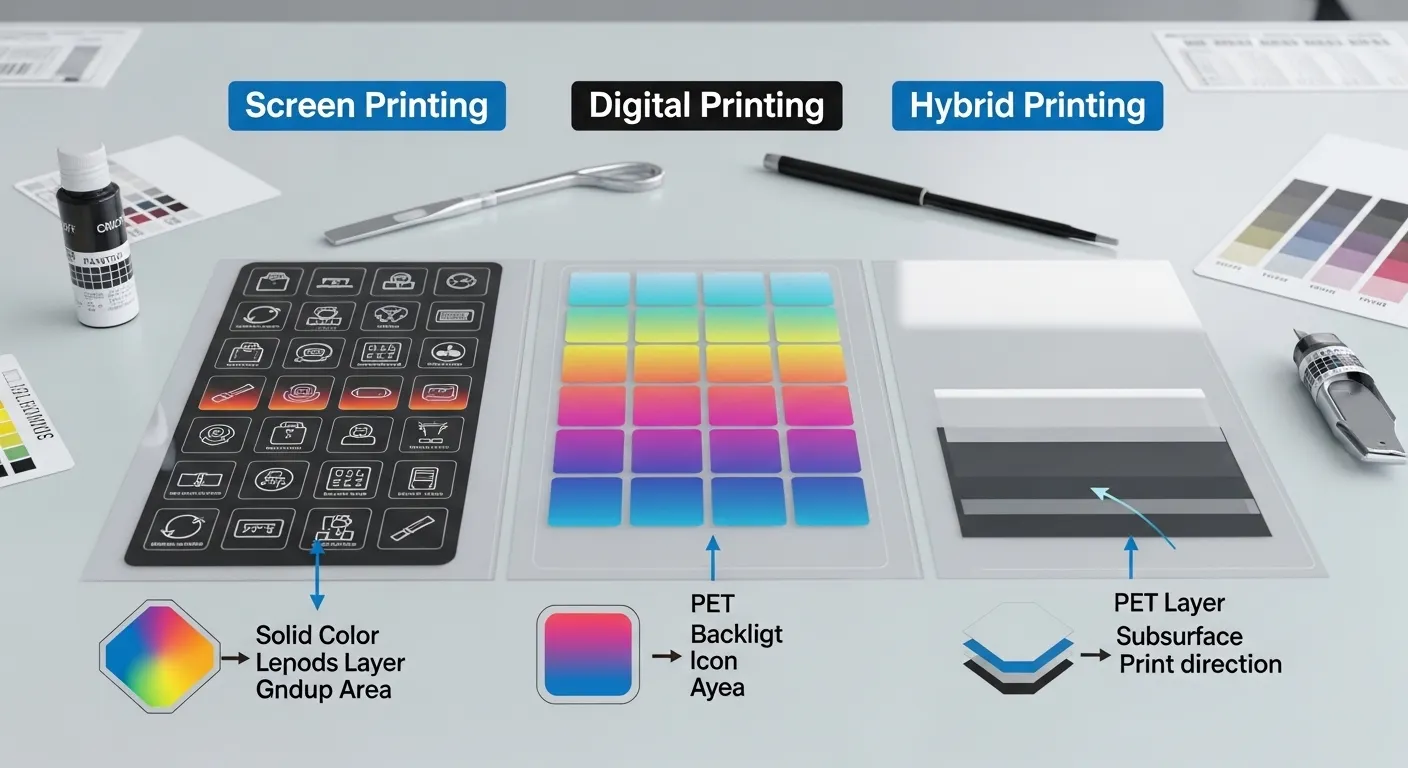
The print process should match the artwork, color requirements, production quantity, and functional needs of the overlay. Many OEM projects use screen printing, digital printing, or a hybrid approach.
| Print method | Best for | Strengths | Watch points | RFQ notes |
|---|---|---|---|---|
| Screen printing | Solid colors, icons, legends, Pantone colors, repeat production | Strong opacity, stable color control, suitable for industrial overlays | Less efficient for complex gradients or frequent design changes | Send Pantone/RAL codes, layer notes, and print-side requirements |
| Digital printing | Complex graphics, gradients, photo-style artwork, prototype variations | Flexible for design testing and multi-color artwork | Color and opacity expectations should be confirmed by sample | Send original artwork files and expected visual standard |
| Hybrid printing | Overlays needing both complex graphics and strong opaque layers | Combines digital detail with screen-printed backing, blocker, or functional layers | Requires clear file separation for each printed layer | Mark windows, backlit icons, blocker layers, and critical color zones |
Screen printing is often preferred when the design uses solid brand colors, high-contrast legends, icons, and repeatable industrial graphics. Digital printing is useful when the artwork has gradients, complex visuals, or prototype variations.
A hybrid method can help when a buyer wants rich artwork but also needs opacity behind LEDs, dead-front areas, or controlled light transmission.
Color matching should be defined before sampling. For production artwork, send Pantone or RAL numbers when available. If the color is critical, provide a physical sample, previous overlay, color chip, plastic housing sample, or approved print reference.
Subsurface printing protects the printed graphics because the ink is printed on the underside of the film. This helps reduce direct wear on legends and icons during operation. It is commonly used for HMI overlays, membrane switch overlays, appliance panels, and industrial control interfaces.
Window areas need separate review. A graphic overlay may include:
For backlit overlays, the artwork should mark which legends, icons, or windows need light transmission. This helps our team review print opacity, blocker layers, LED position, and possible light-guide requirements.
The surface finish affects appearance, cleaning, touch feel, and visibility. A glossy finish can make display windows look clearer, while matte or anti-glare finishes can reduce reflections on equipment used under bright light.
A velvet or fine-texture surface gives the overlay a more tactile feel. It can also reduce visible fingerprints on high-touch interfaces. For control panels, this finish is often used around buttons, legends, and non-window areas.
Hardcoat can be considered when the surface may face frequent cleaning, abrasion, or repeated user contact. For display windows, the buyer may request a clearer surface in the window area and a textured finish elsewhere.
Selective texture is useful when one overlay needs different surface zones. For example, a buyer may want:
For deeper material guidance, see Niceone’s page on polycarbonate membrane switch overlays.
Embossing adds raised or shaped areas to the overlay. It can improve button location, user guidance, brand feel, and tactile response. However, embossing should be planned with the switch structure, artwork, and material choice.
Common embossing options include:
Embossing is especially useful when operators need to locate controls quickly, wear gloves, or use the interface without looking directly at every button. It can also help separate function zones on industrial control panels.
Before production, sample approval should check emboss height, alignment, button feel, print registration, and whether the raised shape affects adhesive bonding or switch performance.
Polyester and polycarbonate are common overlay materials, but they behave differently. Polyester is often selected for flexibility, repeated actuation, and chemical resistance. Polycarbonate is often chosen for clarity, impact resistance, and formed or embossed designs.
The right choice depends on the product environment, user interaction, cleaning method, and whether the overlay is only decorative or part of a membrane switch assembly.
Adhesive selection is just as important. A flat metal enclosure, molded plastic housing, glass surface, powder-coated panel, or textured surface may need different adhesive planning. The RFQ should identify the bonding surface and whether adhesive should cover the full back side or avoid windows, display areas, or moving button zones.
Buyers should also confirm:
A graphic overlay can support a sealed HMI design, but the final IP rating depends on the complete assembly, housing, adhesive, gasket, and test requirements.
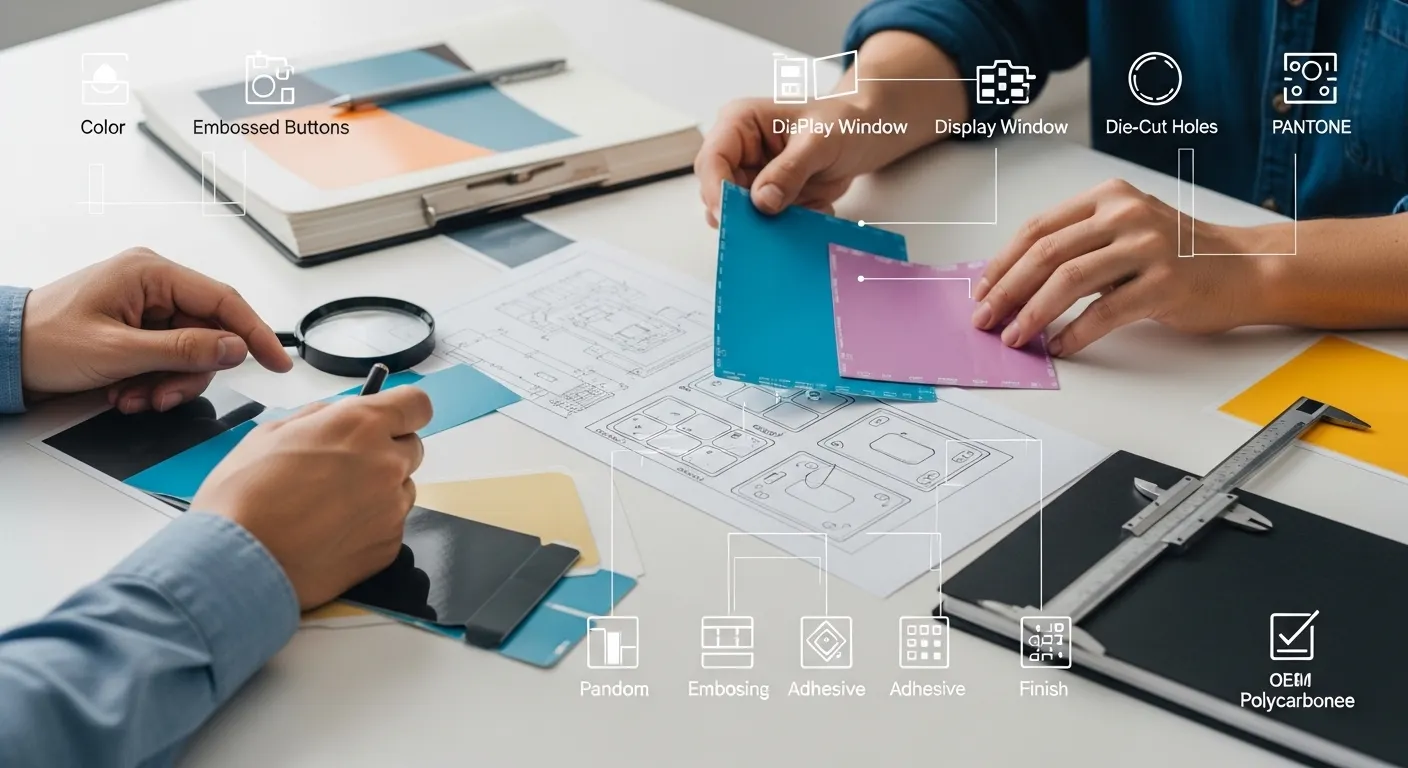
A sample is the best way to confirm the overlay before a production run. Niceone can review sample requirements for color, print, finish, embossing, windows, adhesive, and fit.
When reviewing a sample, check:
If your project needs a pre-production sample, review Niceone’s sample request process.
A clear RFQ package helps the manufacturer quote faster and reduces sample revisions. Send as much detail as possible, especially if the overlay must match an existing product or fit a new housing.
For a custom graphic overlay quote, prepare:
If you do not know every specification, send the drawing and application notes first. Our team can help identify missing details before sampling.
Choose screen printing for solid colors, icons, Pantone matching, and repeat production. Choose digital printing for complex graphics, gradients, or prototype variations. Some overlays use a hybrid process when they need both detailed artwork and strong opaque layers.
Yes, Pantone or RAL references can be used for color planning. For critical colors, send a physical color chip, approved sample, housing sample, or old overlay. Final color should be confirmed through sample approval before production.
Send editable artwork, dimensions, material preference, finish, Pantone/RAL codes, window areas, embossing details, adhesive requirement, housing surface, quantity, and operating environment. CAD files or previous samples are also helpful.
Yes. Graphic overlays can include pillow embossing, rim embossing, dome embossing, logo embossing, or raised symbols. The embossing design should be checked against material choice, switch structure, and sample approval.
Clear gloss is often used for display windows, while matte or textured finishes are used around the window to reduce glare. LED and dead-front areas may need translucent inks and light-blocking layers.
Polycarbonate is often chosen for clarity, impact resistance, and formed designs. Polyester is often chosen for flexibility, repeated actuation, and chemical resistance. The best material depends on the application, cleaning method, and switch structure.
Send Niceone-Keypad your artwork, dimensions, Pantone or RAL references, material preference, finish requirement, embossing plan, window details, adhesive surface, target quantity, and operating environment. Our Dongguan factory and CT office can help review the print process, sample requirements, and quotation path for your custom graphic overlay project.
Do you have any questions, or would you like to speak directly with a representative?

