

Contact
Write to Us And We Would Be Happy to Advise You.
Do you have any questions, or would you like to speak directly with a representative?
By Fariha
Niceone-Keypad supports membrane switch sample requests for OEM engineers, product designers, and procurement teams that need hands-on validation before tooling or production. You can request a stock reference sample to compare tactile feel, overlay finish, LED backlighting, embossing, and construction options, or send your drawing for a custom membrane switch prototype based on your material, circuit, connector, and IP-rating requirements.
This page explains how to prepare a sample request, what affects prototype cost, and what to test when the sample arrives. It is written for buyers who need practical answers before submitting an RFQ, not a basic membrane switch definition.
Niceone-Keypad manufactures custom membrane switches, membrane keypads, graphic overlays, FPC and PCB-based membrane switches, silicone rubber keypads, capacitive switches, dome labels, and waterproof membrane panels from our Dongguan factory, with support from our CT office for US-based communication.
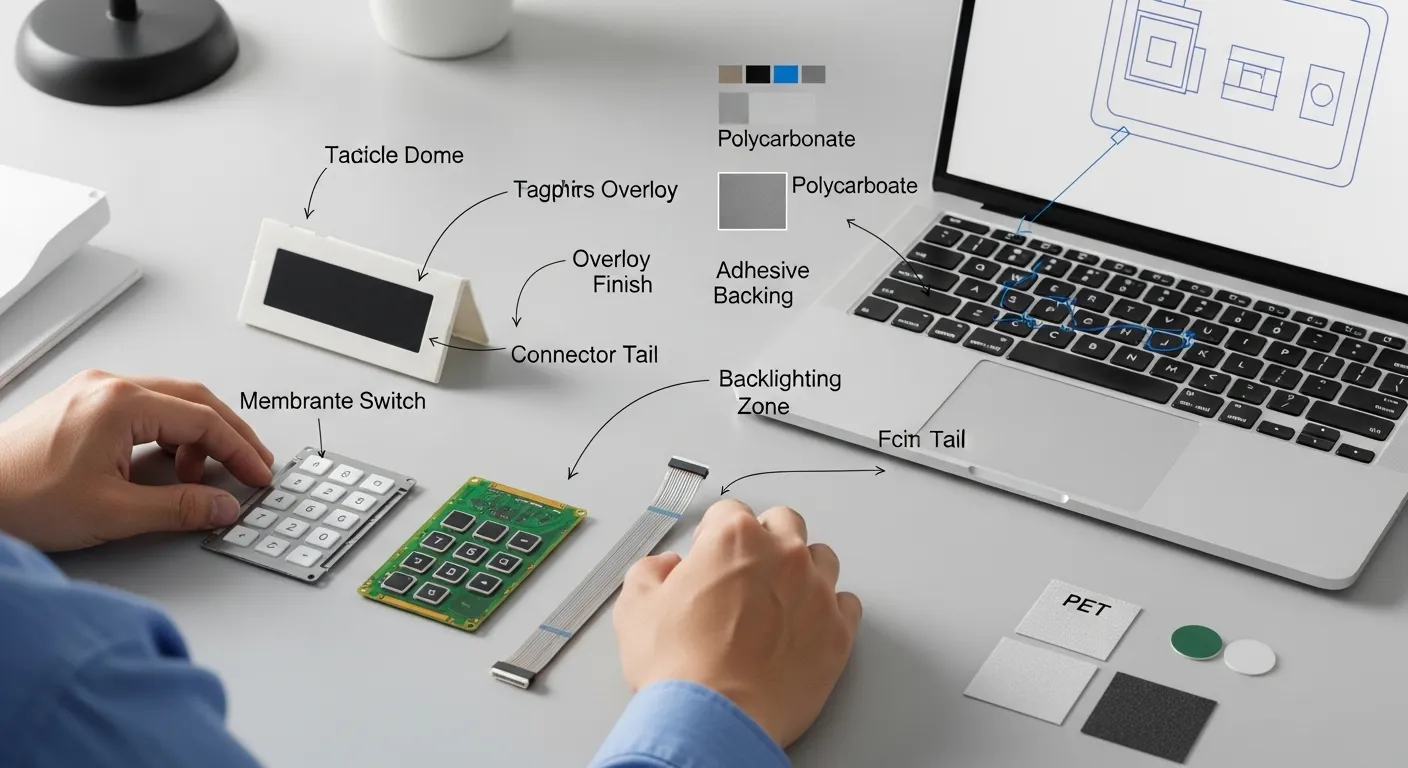
A membrane switch sample helps your team confirm the design before a larger order. It can show whether the overlay finish looks right, whether the tactile response feels acceptable, whether the connector fits the PCB, and whether the adhesive and sealing concept match the product housing.
For many OEM projects, the sample stage prevents expensive revisions later. It gives engineering, purchasing, QA, and product managers one physical part to review before approving tooling, pilot production, or a low-volume build.
For supplier background, you can also review Niceone’s Dongguan manufacturing position.
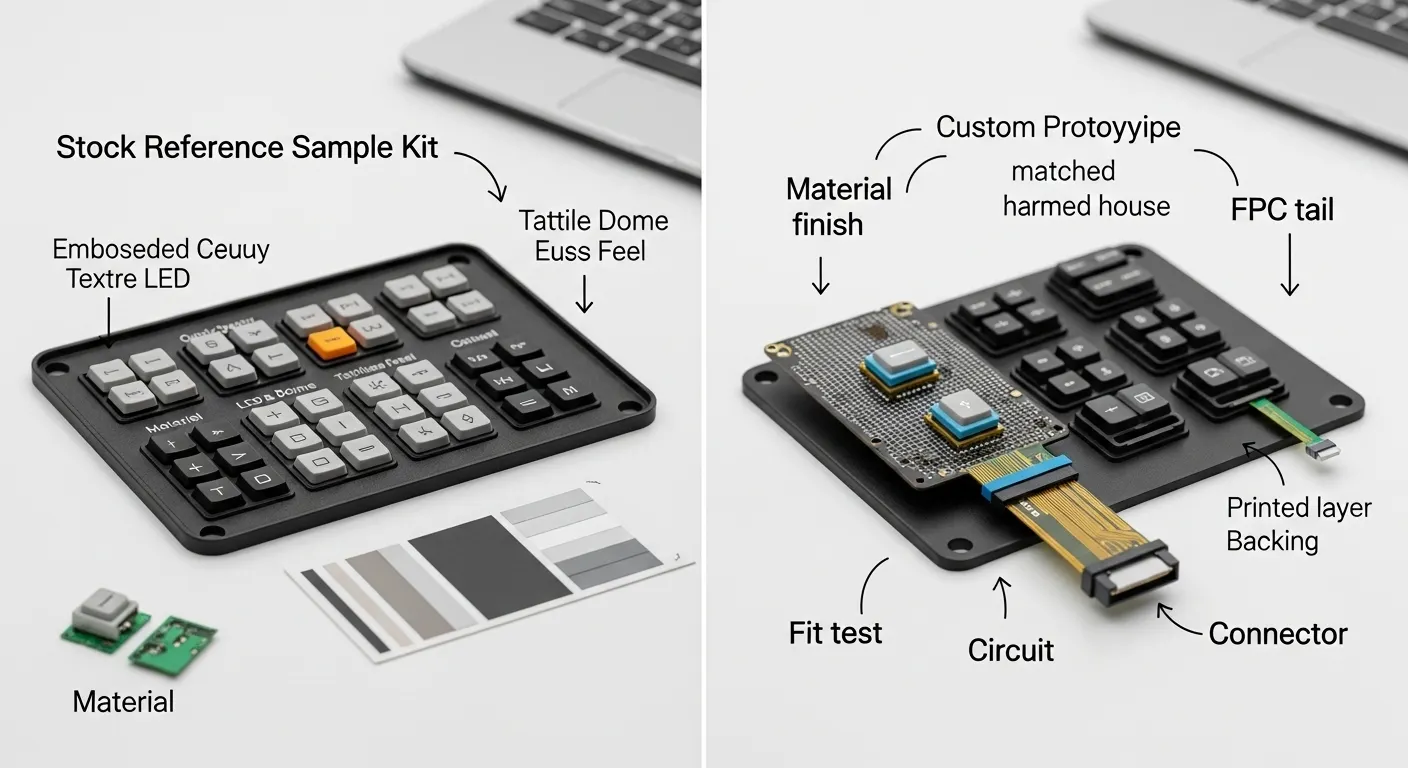
Not every buyer needs the same type of sample. A stock reference sample is useful when you want to feel and compare options. A custom prototype is better when you need to test a real product interface.
| Sample type | Best for | Buyer should send | What it validates | Main cost drivers | What it may not prove yet |
|---|---|---|---|---|---|
| Stock reference sample | Early material and feel comparison | Application type, preferred switch style, backlighting interest | Overlay texture, tactile feel, embossing, LED/backlight examples, general construction | Shipping, available sample type, requested option range | Final size, artwork, circuit, connector, adhesive fit |
| Custom membrane switch prototype | Engineering fit and function review | Artwork, dimensions, circuit, pinout, connector, material, IP target | Fit, graphics, tactile response, circuit layout, connector, adhesive, assembly direction | Tooling, printing, domes, LED/LGF, FPC/PCB, waterproof design, revisions | Final production consistency until production process is approved |
Choose a stock sample if your team is still comparing PET vs PC overlay feel, tactile vs non-tactile response, embossing styles, or backlighting options. Choose a custom prototype if you already have a product housing, PCB, or mechanical drawing.
A clear sample request helps Niceone review the design faster and avoid unnecessary back-and-forth. You do not need every detail finalized, but the more complete the input, the more accurate the prototype discussion will be.
For a custom membrane switch sample, send:
If your drawing is incomplete, send what you have. Niceone’s engineering team can review the missing items and confirm which details are required before sampling.
Sample cost depends on how close the sample must be to the final production part. A simple reference sample is different from a custom prototype with new artwork, circuit layers, embossing, LED windows, sealing, and connector requirements.
Common cost factors include:
For buyers planning a pilot build after sample approval, Niceone also supports low-volume custom membrane switch orders. See the related low MOQ guide.
Sample fee logic should be confirmed before the order starts. In many custom projects, a stock sample, custom prototype, and tooling-based sample may be treated differently.
Ask the Niceone team to confirm:
This protects both sides. The buyer knows the commercial path before payment, and the manufacturer knows which sample standard the buyer expects.
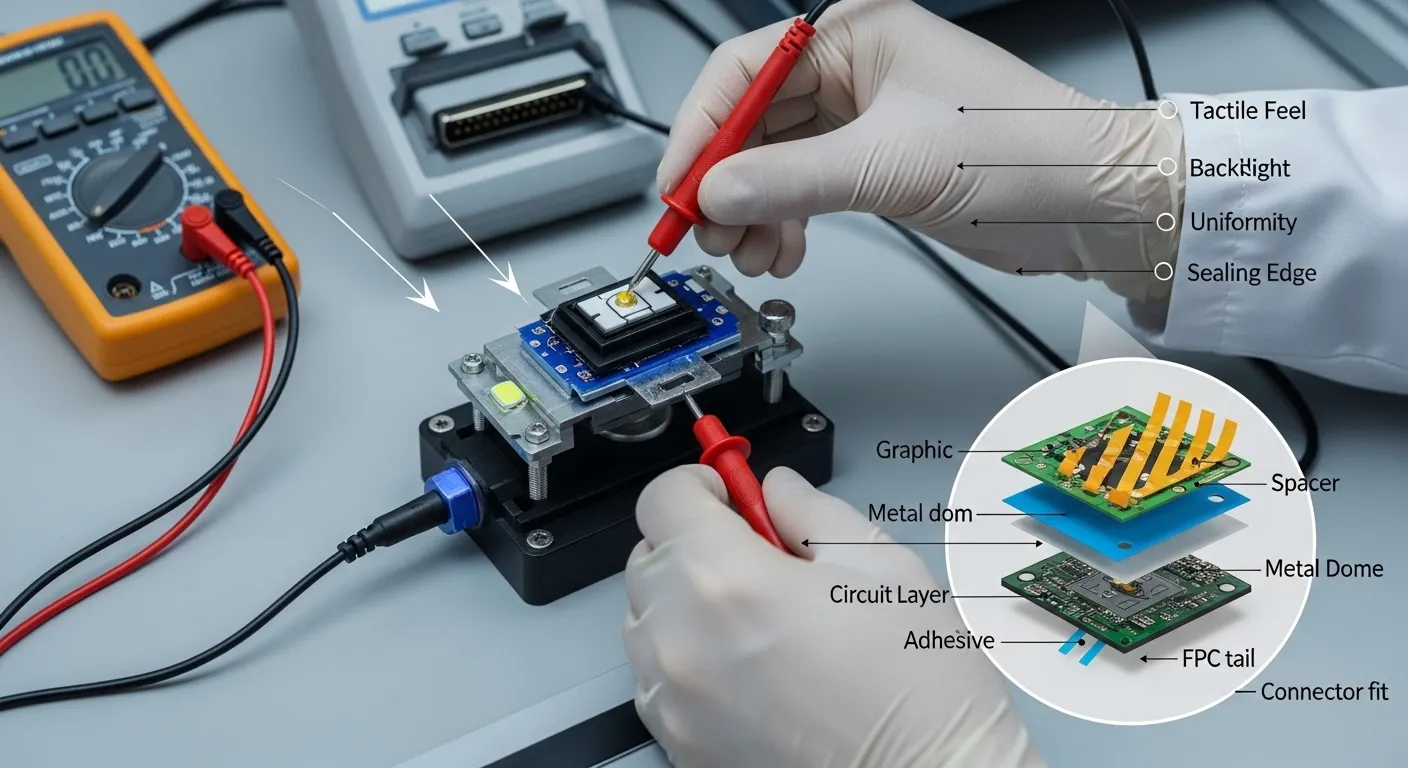
A membrane switch sample should not be reviewed only by appearance. Engineering and QA teams should test the sample against the real product environment.
Check the physical fit first. Confirm the outer size, tail exit direction, connector position, button alignment, window location, and adhesive mounting area. Then install the sample on the intended housing or test fixture.
Review the user interface details:
Also test the electrical and assembly details:
For wet, outdoor, or salt-exposed products, review the sealing approach early. Marine electronics buyers can also compare related design factors in Niceone’s marine membrane switch panels guide.
After the sample is approved, the next step is to freeze the design for production. This includes artwork, color, material, circuit layout, connector, adhesive, dome selection, backlighting, and inspection requirements.
Before moving to pilot or mass production, confirm:
If the sample needs changes, mark them clearly. Small artwork or connector changes may be easier to handle than changes to tooling, embossing, circuit structure, or housing fit. Confirm revision impact before approving the next sample.
Talk to Niceone early if your membrane switch has special requirements or incomplete specifications. Early review is useful when the product needs waterproof sealing, outdoor durability, chemical resistance, backlighting, ESD shielding, or a complex connector layout.
It is also helpful for rugged projects where the interface may face vibration, gloves, moisture, dust, or harsh cleaning. For military-style rugged HMI design considerations, see Niceone’s military-grade membrane interfaces guide.
You should also contact the team before sampling if you are comparing membrane switches with silicone rubber keypads, capacitive switches, or PCB-based control panels. The right sample path depends on the product environment, assembly method, and user interaction.
Yes. You can request a stock reference sample for option review or a custom prototype based on your drawing. The right path depends on whether you need general feel comparison or product-specific fit and function testing.
Finished drawings help, but early files are also useful. Send dimensions, artwork, button layout, circuit notes, connector needs, material preference, and application environment. Niceone can confirm missing details before sampling.
Cost usually increases with custom tooling, embossing, metal domes, LEDs, light guide film, FPC or PCB circuits, waterproof sealing, display windows, OCA bonding, special adhesives, and multiple revisions.
This should be confirmed by project. Stock samples, custom prototypes, and tooling-based samples may follow different policies. Ask Niceone to clarify fee, credit, and revision terms before the sample order starts.
Check fit, print quality, tactile feel, actuation, connector fit, tail bend, adhesive bond, backlight uniformity, window clarity, and sealing design. Test it on the real housing when possible.
A prototype should validate key design choices, but final production still requires approved drawings, materials, tooling, inspection criteria, and process confirmation. Confirm what the sample represents before approving production.
Send your membrane switch sample request with drawings, artwork, target material, button layout, circuit or pinout, connector requirement, adhesive surface, backlighting needs, IP-rating target, application environment, and expected production quantity.
Niceone-Keypad can review your files, confirm whether you need a stock sample or custom prototype, and help prepare the next step from sample validation to pilot or production order through our Dongguan factory and CT office support.
Do you have any questions, or would you like to speak directly with a representative?

