

Contact
Write to Us And We Would Be Happy to Advise You.
Do you have any questions, or would you like to speak directly with a representative?
By Fariha
Niceone-Keypad builds OEM membrane switches for sale to product managers, hardware engineers, and procurement teams that need custom HMI panels made to their drawings, samples, overlay artwork, circuit layout, connector, adhesive, and IP-rating goals. From our Dongguan factory and CT office support, Niceone helps buyers specify tactile domes, non-tactile panels, capacitive switches, backlighting, graphic overlays, FPC circuits, PCB-based builds, and waterproof membrane switch structures for bulk production.
This page is for OEM buyers who already know they need a membrane switch supplier and want a faster path to quote. Instead of starting with a basic definition, it focuses on what affects build feasibility, quote accuracy, material choice, and supplier evaluation.
To start, send your drawing, sample photo, overlay file, circuit schematic, target quantity, application environment, and any IP, backlighting, connector, or documentation requirement. Niceone can review the details and recommend the right custom build route.
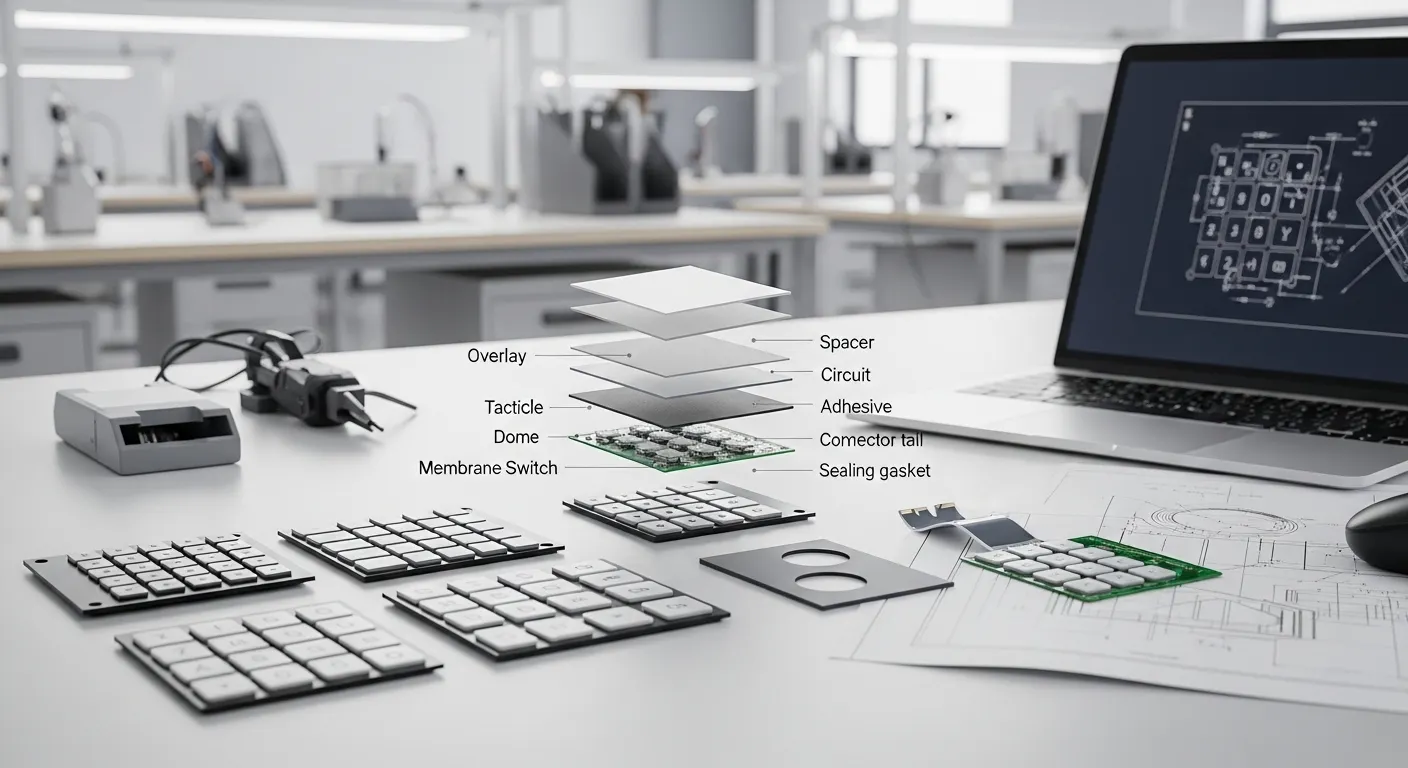
OEM membrane switches are not one-size-fits-all parts. The overlay design, key layout, circuit, spacer, adhesive, connector, and sealing structure all need to match the final device.
Niceone-Keypad supports custom builds for buyers who need:
For OEM and private-label projects, the visual design can be matched to your equipment housing, brand colors, icon system, display windows, and user-interface layout. The electrical design can also be reviewed around your circuit requirements, tail direction, connector type, pinout, and assembly space.
Niceone’s Dongguan production base supports custom manufacturing, while the Redding, CT office gives US buyers a clearer communication path for early project discussion.
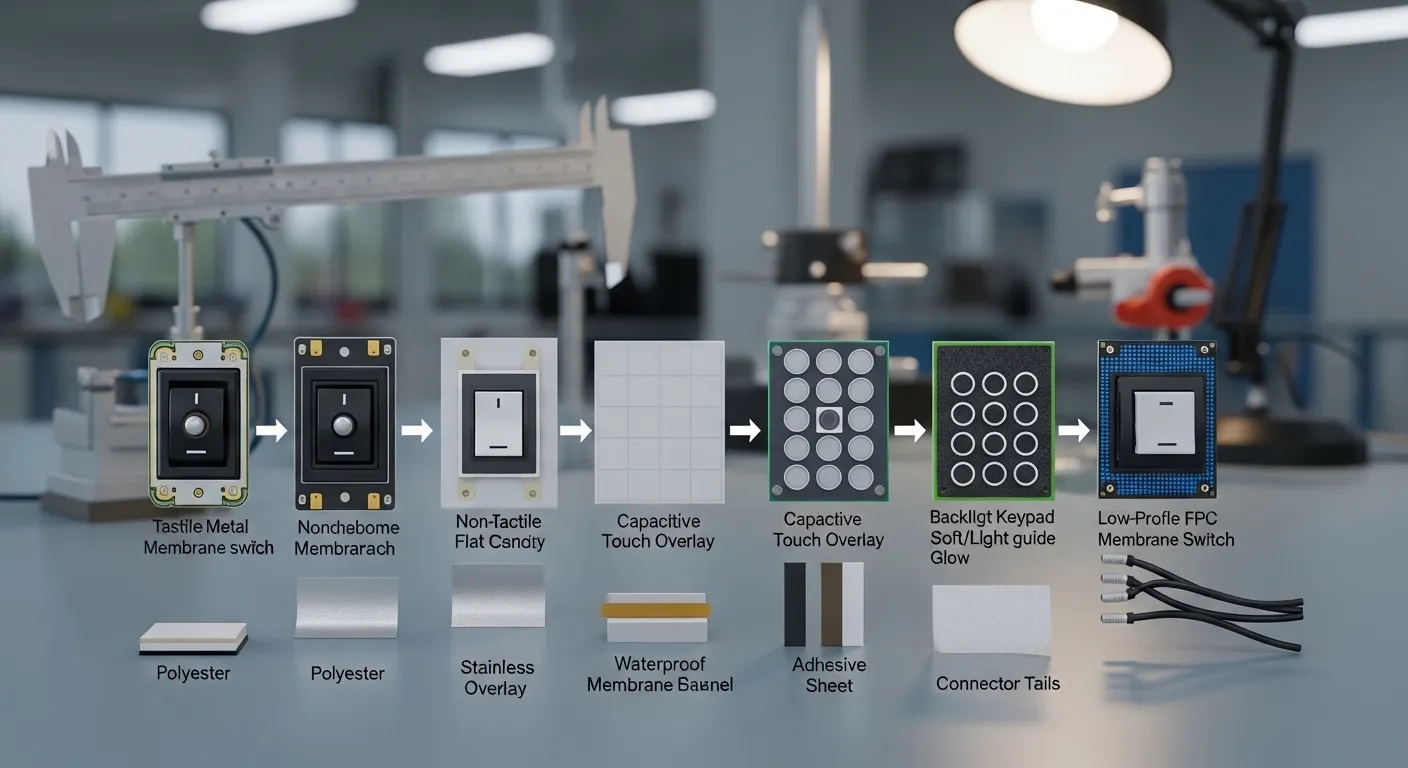
The right OEM build depends on how the user will press the interface, where the device will operate, and how the panel will be assembled into the final product.
A tactile membrane switch is suitable when users need a clear click response. It is common in industrial controls, medical device panels, handheld equipment, and appliances where operators need confirmation without looking closely at the panel.
A non-tactile membrane switch works well when the buyer wants a flat, cleanable, lower-profile surface. This style is often selected for simple controls, sealed panels, or applications where a smooth front face is more important than click feedback.
A capacitive membrane switch can support a modern touch-style interface. It may fit products where the buyer wants a sleek surface, hidden icons, or a glass-like HMI feel, depending on the enclosure and operating environment.
Backlit membrane switches are useful for dim rooms, night operation, vehicle cabins, industrial machines, medical equipment, or status indication. Niceone can review LED, light guide film, or fiber optic backlighting requirements based on the icon layout, brightness goal, and circuit structure.
For compact assemblies, a slim membrane switch design may be important. For more detail on thin HMI construction, see Niceone’s low-profile membrane switch guide.
A clear RFQ reduces back-and-forth and helps the engineering team review feasibility before production. The best quote request includes both commercial and technical details.
Send these items when available:
If the product will face cleaning chemicals, oils, solvents, or outdoor exposure, material choice becomes more important. For overlay-focused projects, review Niceone’s chemical-resistant membrane switch overlay page.
Medical device buyers often focus on cleanable surfaces, stable legends, sealed front panels, tactile clarity, display windows, and documentation needs. The design should avoid dirt traps and support the cleaning method used in the final environment. Any medical compliance requirement should be stated clearly in the RFQ so the correct documents can be reviewed.
Industrial equipment buyers usually care about durability, glove use, moisture, dust, oil, chemical exposure, and service life expectations. These projects may need stronger adhesive selection, ESD or RFI shielding, rugged tail routing, and a sealed panel structure. For wet or dusty control panels, see Niceone’s waterproof membrane switch panel guide.
Automotive and vehicle HMI buyers often care about low profile, backlighting, icon clarity, temperature exposure, vibration, connector routing, and consistent tactile feel. Some projects may also need a more rugged surface or metal interface design. For stainless or metal-style front interfaces, see Niceone’s stainless steel membrane switch interface page.
| Buyer requirement | Recommended build option | Technical choices to confirm | Specs or files to send |
|---|---|---|---|
| Clear click feedback | Tactile membrane switch | Metal dome, embossing, actuation feel, key size | Drawing, key layout, force preference, sample if available |
| Flat cleanable panel | Non-tactile membrane panel | Overlay material, spacer, adhesive, surface finish | Artwork, dimensions, cleaning exposure, adhesive surface |
| Modern touch interface | Capacitive switch | Sensor layout, overlay thickness, environment, grounding | UI layout, enclosure material, touch area, circuit need |
| Night or low-light use | Backlit membrane keypad | LED, LGF, fiber optic, icon transparency, power input | Artwork, lighting zones, color, brightness expectation |
| Wet or dusty environment | IP-rated membrane switch | Sealing frame, adhesive, gasket, tail exit, enclosure fit | IP target, housing drawing, mounting method |
| Compact device space | Low-profile membrane switch | Stack thickness, circuit route, connector, adhesive | Space limit, tail direction, assembly drawing |
| Harsh cleaning or chemicals | Chemical-resistant overlay | PET/PC/metal option, hardcoat, print protection | Chemical list, cleaning method, exposure frequency |
This matrix helps buyers turn a broad sourcing request into a buildable specification. It also helps procurement teams compare suppliers on engineering support, not only price.
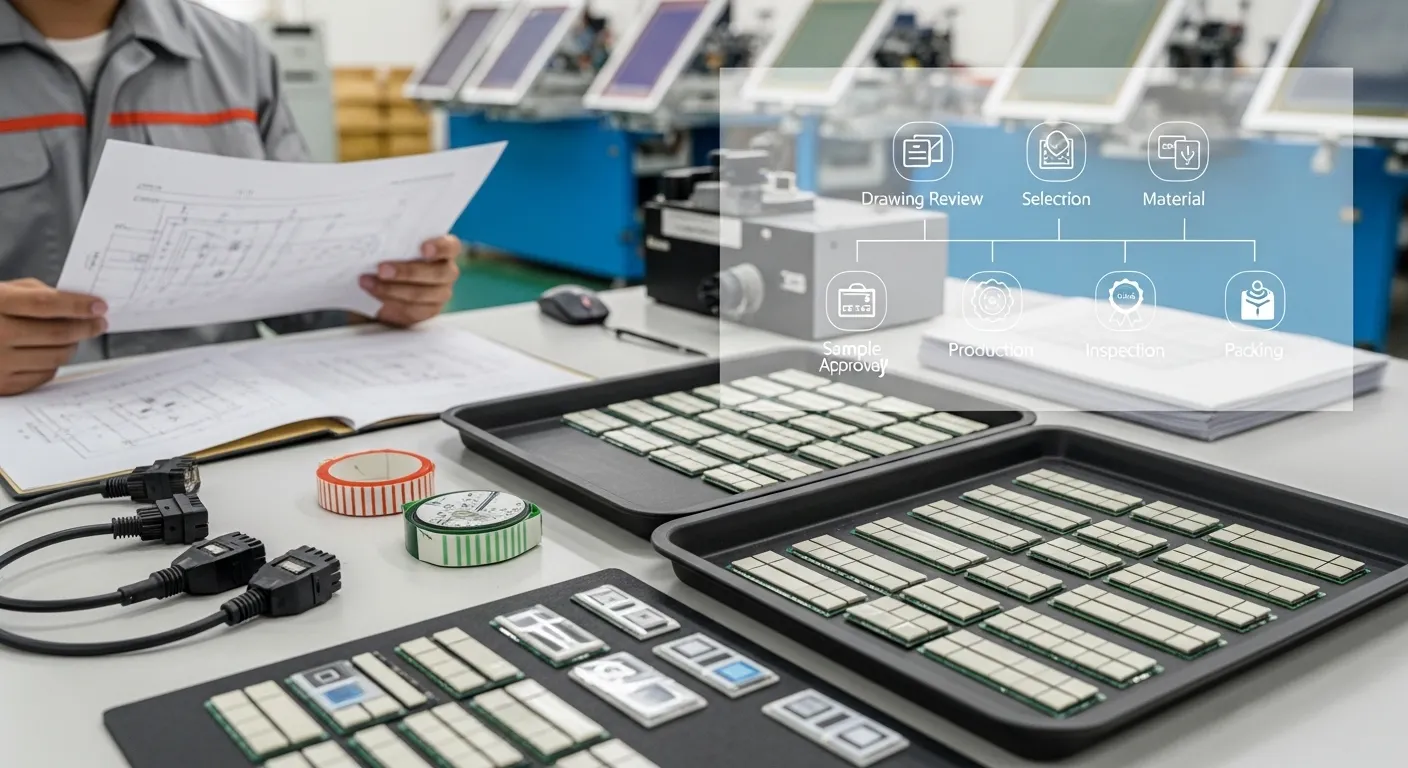
A custom OEM project usually starts with file review. Niceone’s team checks the drawing, artwork, application environment, circuit needs, connector layout, and assembly method. If the buyer has only a sample or photo, the team can review what information is still missing.
Next, the design is adjusted for manufacturability. This may include overlay material selection, key embossing, dome placement, spacer design, circuit routing, adhesive choice, window treatment, backlighting structure, and tail direction.
For new products, a sample or prototype stage may be needed before bulk build. This helps the buyer confirm appearance, tactile feel, connector fit, panel adhesion, display window alignment, and basic functional performance.
After approval, the production team prepares the build according to the confirmed drawing and specification. Inspection requirements, packing method, labeling, and documentation requests should be agreed before production starts.
For waterproof membrane switches, IP rating should always be treated as project-specific. The sealing design depends on the housing, adhesive, gasket, tail exit, overlay structure, and assembly pressure. A switch panel cannot be judged by the front overlay alone.
If your project targets IP65, IP67, or another rating, send the target early. Niceone can review the structure and advise what needs to be confirmed before production or testing. For higher IP requirements, third-party testing or project-specific documentation may be needed.
Compliance should also be handled carefully. If your buyer file requires RoHS, REACH, UL-related material information, medical documentation, automotive documentation, or other records, state that in the RFQ. Do not assume one general certificate covers every custom build.
For regulated markets, request project-specific confirmation before sample approval. This keeps the quote realistic and prevents problems later in procurement or quality review.
To request a quote, send the most complete technical package available. A drawing is best, but a sample photo, sketch, existing part, or product housing file can also start the review.
Include your application, target quantity, overlay design, circuit needs, connector or pinout, IP target, backlighting requirement, adhesive surface, operating environment, and any documentation request. If your team is still deciding between tactile, capacitive, backlit, FPC, PCB, or sealed construction, Niceone can help compare the options before quotation.
Yes. Niceone can review drawings, samples, photos, artwork, circuit requirements, connector details, and application conditions to recommend a custom membrane switch build route.
Send dimensions, artwork, key layout, circuit schematic, connector type, tail length, adhesive surface, IP target, backlighting need, application environment, quantity, and any documentation requirements.
Yes, but the rating depends on the full design. Sealing, adhesive, gasket structure, tail exit, enclosure fit, and testing plan all affect IP performance.
Choose tactile for click feedback, non-tactile for a flat cleanable surface, and capacitive for a modern touch-style interface. The best option depends on user experience and environment.
Niceone supports backlighting solutions such as LED, light guide film, and fiber optic designs. Send your icon layout, lighting zones, color target, and power requirements for review.
Documentation depends on the project, material, and buyer requirement. State any RoHS, REACH, UL-related, medical, automotive, or other documentation needs during the RFQ stage.
Ready to source OEM membrane switches for sale in bulk? Send Niceone-Keypad your drawing, sample photo, overlay artwork, target quantity, application, IP rating goal, connector or pinout, backlighting need, adhesive surface, material preference, and documentation requirements.
Our Dongguan factory and CT office support team can review your custom membrane switch project and help confirm the right build path before quotation.
Do you have any questions, or would you like to speak directly with a representative?

